

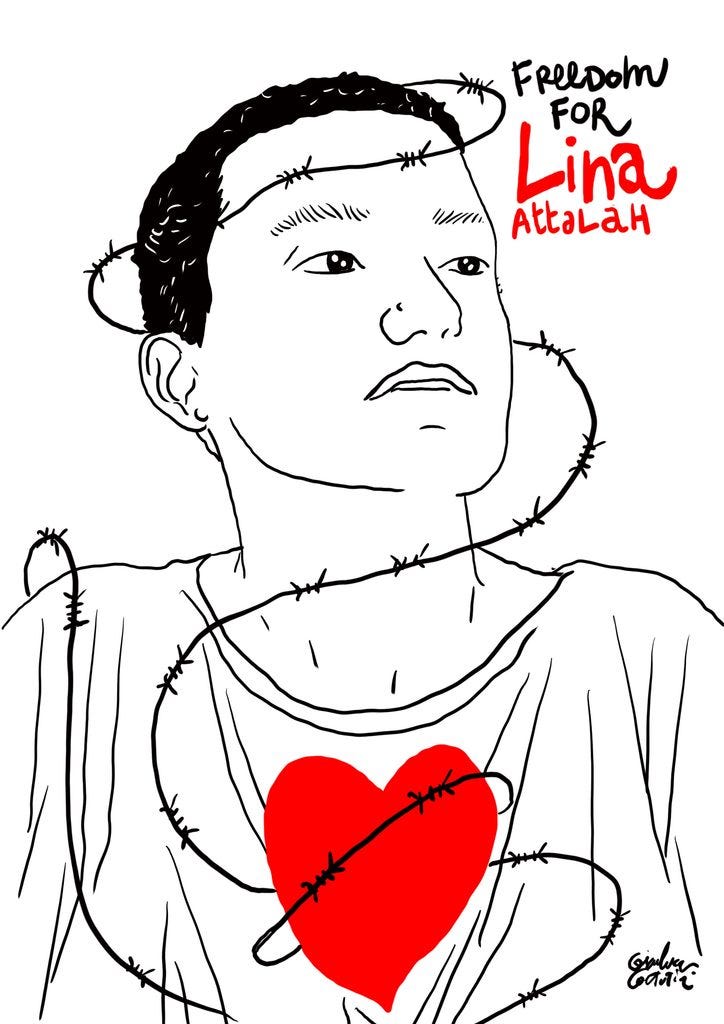
On October 27, a judge in New Cairo ordered Mada Masr closed. He fined its editor-in-chief, Lina Attalah, three million Egyptian pounds, the maximum the law allows, and ordered the confiscation of its equipment once the verdict becomes final. Security personnel then detained her in the courtroom. She was held for more than seven hours, until supporters crowdfunded the fine. Mada’s appeal against the closure is set for November 25.
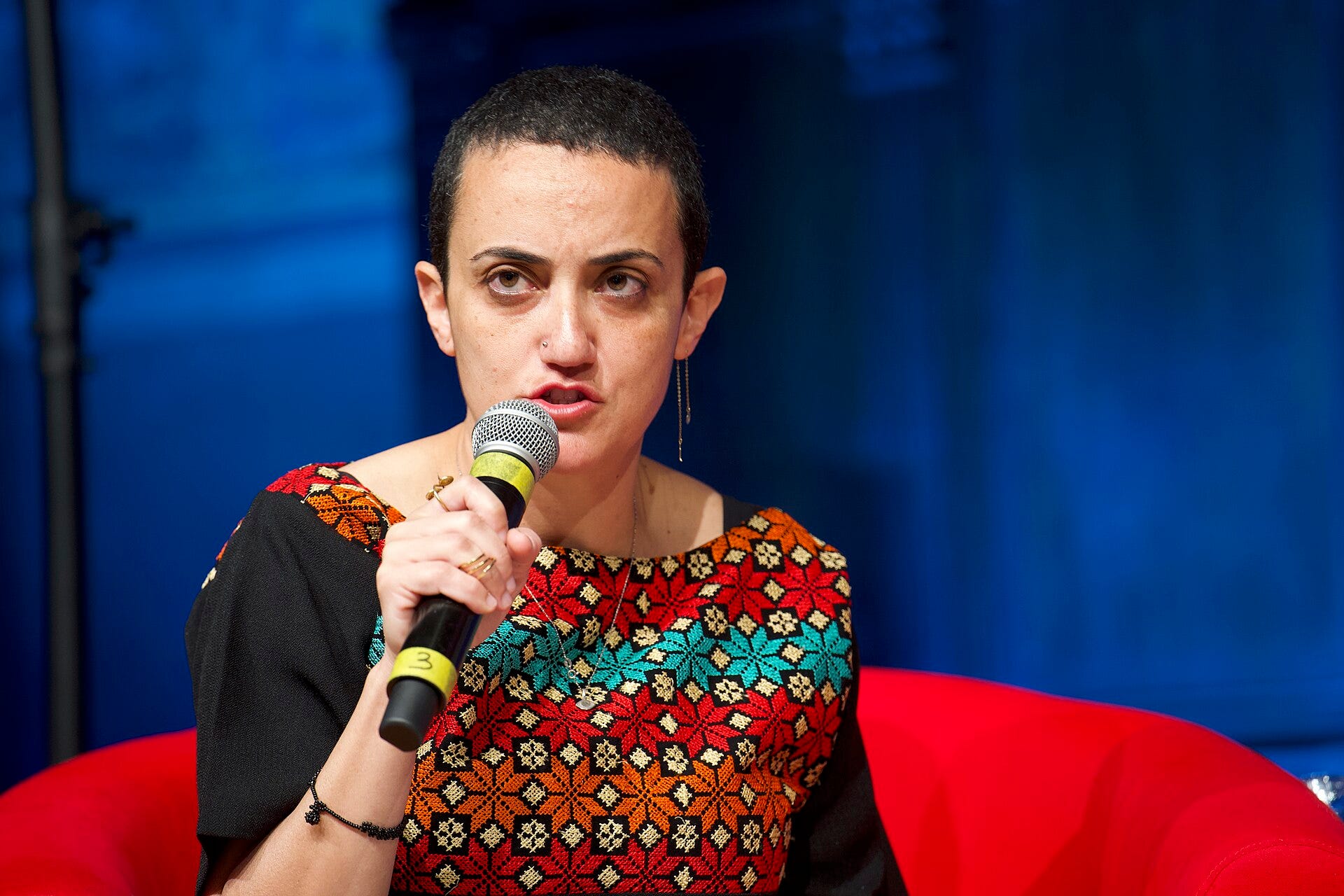
While her lawyers processed her release, they found a sentence nobody had told her about. A court had convicted her in absentia in 2024 and given her a year in prison for spreading false news and running a website without a license. Her lawyers objected, which forces a retrial. On Wednesday, November 11, Attalah goes before a criminal court on those charges. “Spreading false information” carries up to a year in prison. The license charge carries a fine of two million pounds. Amnesty International, having watched how the judge ran the first trial, warns there is a serious risk she will be sent to prison.
Mada Masr is the most important independent newsroom in Egypt. It was founded on 30 June 2013, days before the coup that brought Abdel Fattah al-Sisi to power, and it publishes in Arabic and English. It checks what the state says and prints what it finds. TIME named Attalah one of its 100 most influential people in 2020. Reporters Without Borders gave her its courage award the same year. In 2023, the governments of Canada and the United Kingdom gave Mada Masr their Media Freedom Award.
Watch: why Lina’s retrial matters, in under three minutes.
The crime is publishing
In 2017 the authorities blocked Mada’s website. Mada kept reaching readers through social media and proxies, which were shut down again and again. Sharif Abdel Kouddous, who worked there for four years, called it “this cat-and-mouse game.” In November 2019, plainclothes security forces raided the office and took Attalah and two senior colleagues in for questioning after Mada reported that Sisi’s son had been moved out of the intelligence services and sent to Russia.
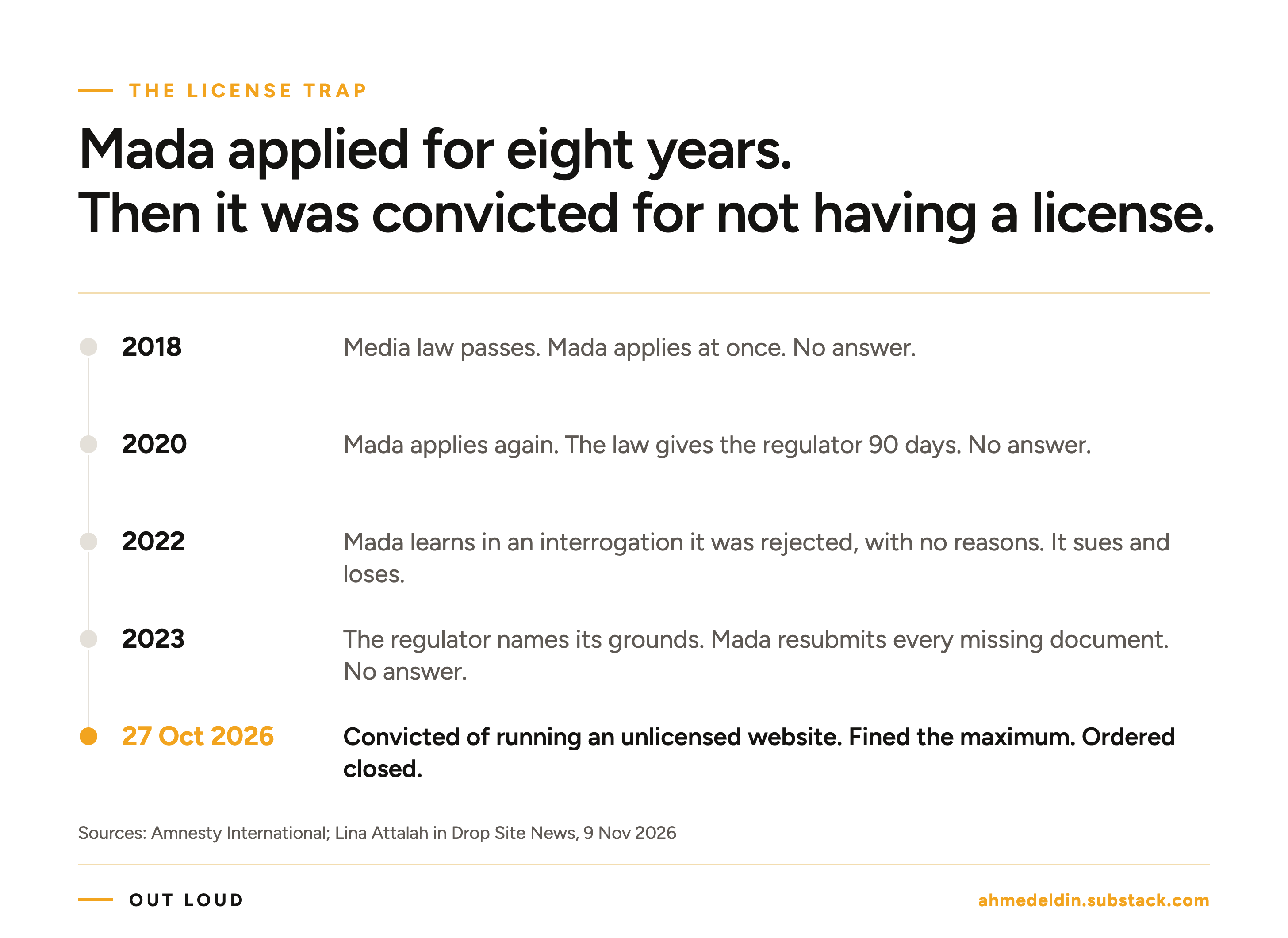
The charge that closed Mada last month is “operating an unlicensed website.” Mada applied under the 2018 media law in 2018 and again in 2020. The law gives the regulator 90 days to answer. It never did. In 2022 Mada learned, during an interrogation, that its application had been rejected without reasons. It sued and lost. In 2023 the regulator finally named its grounds, and Mada resubmitted with every document the regulator said was missing. It has heard nothing since.
The state refused the license for eight years, then convicted the editor for not having one. “We’re not against regulation,” Attalah told AFP. “We have a problem when the licensing becomes a tool of control, a tool of exclusion.”
The false news charge fails the law too. In 2017, the UN and regional rapporteurs on free expression declared in a joint declaration that general bans on “false news” have no place in international law. Egypt is a party to the International Covenant on Civil and Political Rights, and the UN Human Rights Committee has said the covenant forbids blanket bans of this kind.
The trial moved at a speed Egyptian courts rarely reach. Attalah was summoned by State Security on October 21 and sent to trial six days later. It was her sixth interrogation in a few years and her first referral to court. The judge refused to adjourn, refused to let the defense submit documents or call witnesses, and, according to reports from the hearing, appointed a lawyer for her over her objection while her own eight-member legal team sat in the room. Journalists were kept out during key stages. Amnesty’s secretary general, Agnès Callamard, called it a masquerade of justice. Attalah was pulled out of the room before the judge finished.
“It felt like I was being kidnapped from the courtroom,” she told AFP. “I did not hear the verdict as I was being pulled by the cops.”
A newsroom called “Don’t Believe It”
When State Security summoned her, Attalah was reporting on six of her peers, some of whom she had mentored. Between September 28 and 30, the authorities arrested the entire newsroom of Matsadaash, an independent fact-checking and investigative platform whose name means “Don’t believe it.”
For five days nobody would say where they were.
They are Abdullah Qadri, 35, an investigative journalist arrested twice before. Mohamed Ashraf Abu Emaira, 30, who had worked at Mada Masr and Raseef22. Mohammed Adel, 29, whose economics reporting fed into investigations due out this month. Islam Barakat, 39, a former human rights researcher. Mohamed Mahmoud, 26, the social media manager, who had not finished his second month in the job. And Omar Hilal, 21, an intern, arrested before his first byline.
Their lawyers at the Egyptian Initiative for Personal Rights say most of them told prosecutors they were bound, blindfolded and beaten in National Security facilities, stripped, given electric shocks and threatened with harm to their families. EIPR says officers forced them to record fabricated “confessions.” The Interior Ministry denies it, and the prosecution says a forensic examination of three of the six found no injuries.
The prosecution calls Matsadaash a Muslim Brotherhood media platform and calls the journalists’ salaries foreign funding. EIPR points out that the prosecution’s statement does not identify a single Matsadaash report as false. The six are charged with joining a terrorist group and spreading false news. The terrorism charges carry the death penalty. A colleague in Cairo told RSF that “all journalists are accused of that here.”
On November 5, thirteen UN experts, among them the special rapporteurs on torture, on freedom of expression and on human rights in counterterrorism, condemned the arrests. They said the six were forcibly disappeared for five days, denied access to lawyers and allegedly tortured during interrogation, and that terrorism charges carrying the death penalty fall short of the threshold international law sets for “the most serious crimes.” They wrote that “the torture and ill-treatment of these journalists is an egregious example of a severe and relentless crackdown on independent voices.”
Ben Saul, the UN’s special rapporteur on counterterrorism, named it directly on X: “the abuse of terrorism charges.” The experts also raised the transnational repression of Matsadaash’s founder, Abdelrahman Mansour, who lives in exile in the United States. After the Interior Ministry publicly branded him a “fugitive,” he faced threats, a smear campaign and violations of his privacy.
After the arrests, Mada joined other Egyptian and regional outlets in a solidarity flash newsroom to cover what Matsadaash no longer could. Shortly after, Attalah was interrogated and referred to trial. “It’s hard to separate between those two incidents,” she told AFP. The journalist Rasha Azab has since been summoned for questioning, and pro-government commentators have gone after the Journalists Syndicate for defending the six. Its head, Khaled Elbalshy, has refused to back down: “What happens to one colleague affects us all.”
Most people don’t grasp how far this has gone
Egypt has jailed journalists for years. In December 2013 it arrested three journalists from Al Jazeera English, where I later worked: Peter Greste, Mohamed Fahmy and Baher Mohamed. They spent more than a year in prison. Twenty-six journalists are behind bars in Egypt today, Attalah wrote on Monday. Hundreds of news and civil society sites are blocked.
What changed this autumn is the target. For a decade the state harassed a handful of independent outlets and human rights groups and let them survive on a narrow margin. Mada Masr has faced six criminal investigations in six years, and this is the first one sent to trial. Hossam Bahgat, who heads EIPR and sat in the courtroom, says the security agencies are “moving from years of harassing independent media to wiping them out completely.” PEN International says the referral to trial shows “a clear intent to entirely shutter the independent media space.” The UN experts wrote that the case against Matsadaash reflects “a widespread and escalating practice of the unlawful detention of journalists in Egypt.” Attalah calls it “a new chapter in trying to limit the already-limited space that there is for independent media.”
Since August, Sisi has spoken more and more often of a conspiracy to destabilise the country and of “traitors, criminals, and saboteurs.” The Matsadaash journalists were picked up while the government prepared a staged national conference to “listen to citizens’ views.”
Who signed off
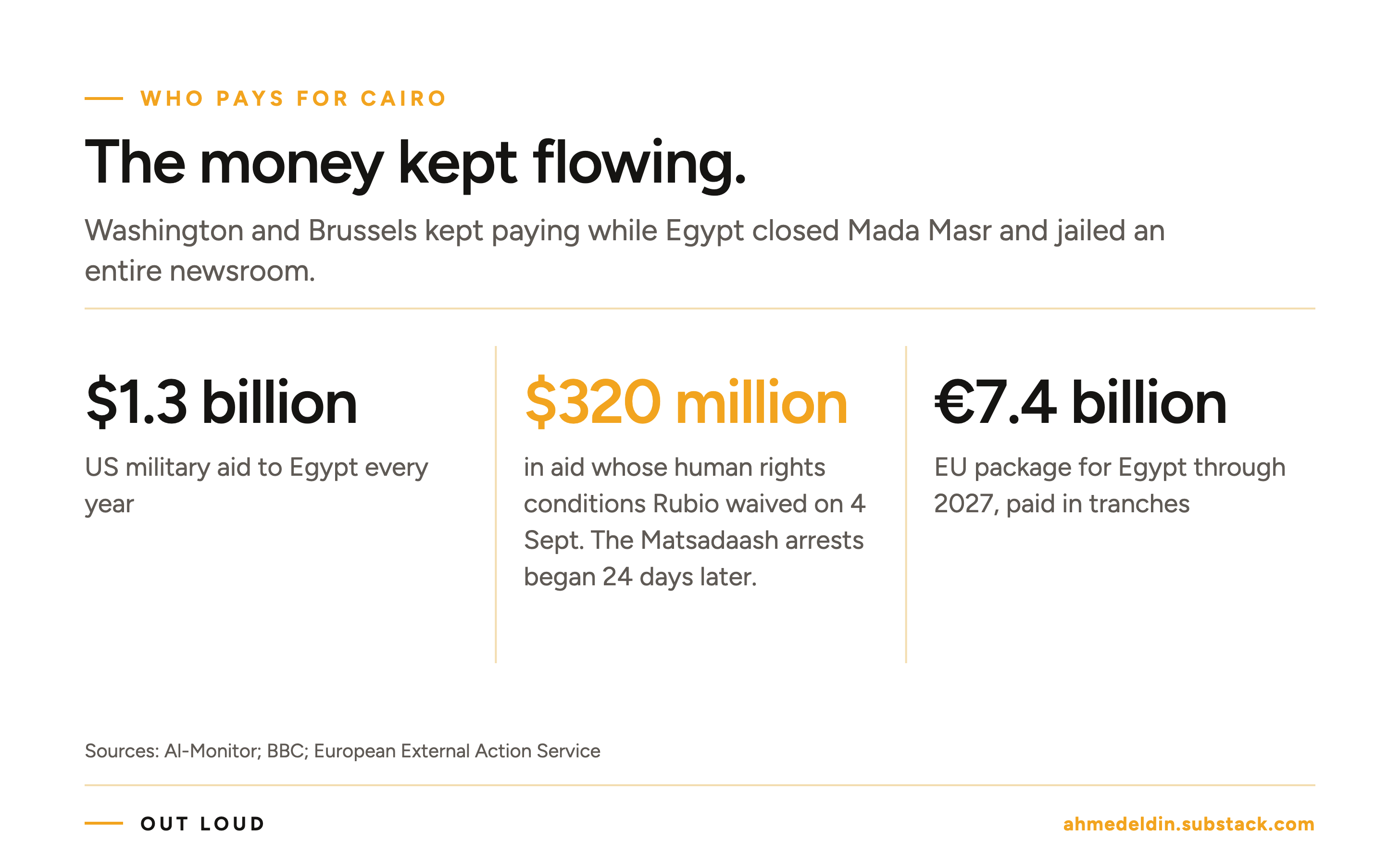
On September 4, Secretary of State Marco Rubio signed a memo waiving the human rights conditions on $320 million in US military financing for Egypt. Congress attached those conditions so that a slice of the $1.3 billion Washington sends Cairo every year would depend on democracy and human rights. Rubio’s memo cites Egypt’s “helpful role” after Operation Epic Fury, the American war on Iran. The letter informing Congress went out on September 21. A week later, the Matsadaash journalists disappeared.
Senator Chris Murphy, who sits on the Foreign Relations Committee, drew the line himself: “The minute that money was released, the crackdown began in an absolutely devastating way.” The State Department told the BBC the waiver reflected Egypt’s “importance to US national security interests” and declined to discuss its private conversations with Cairo.
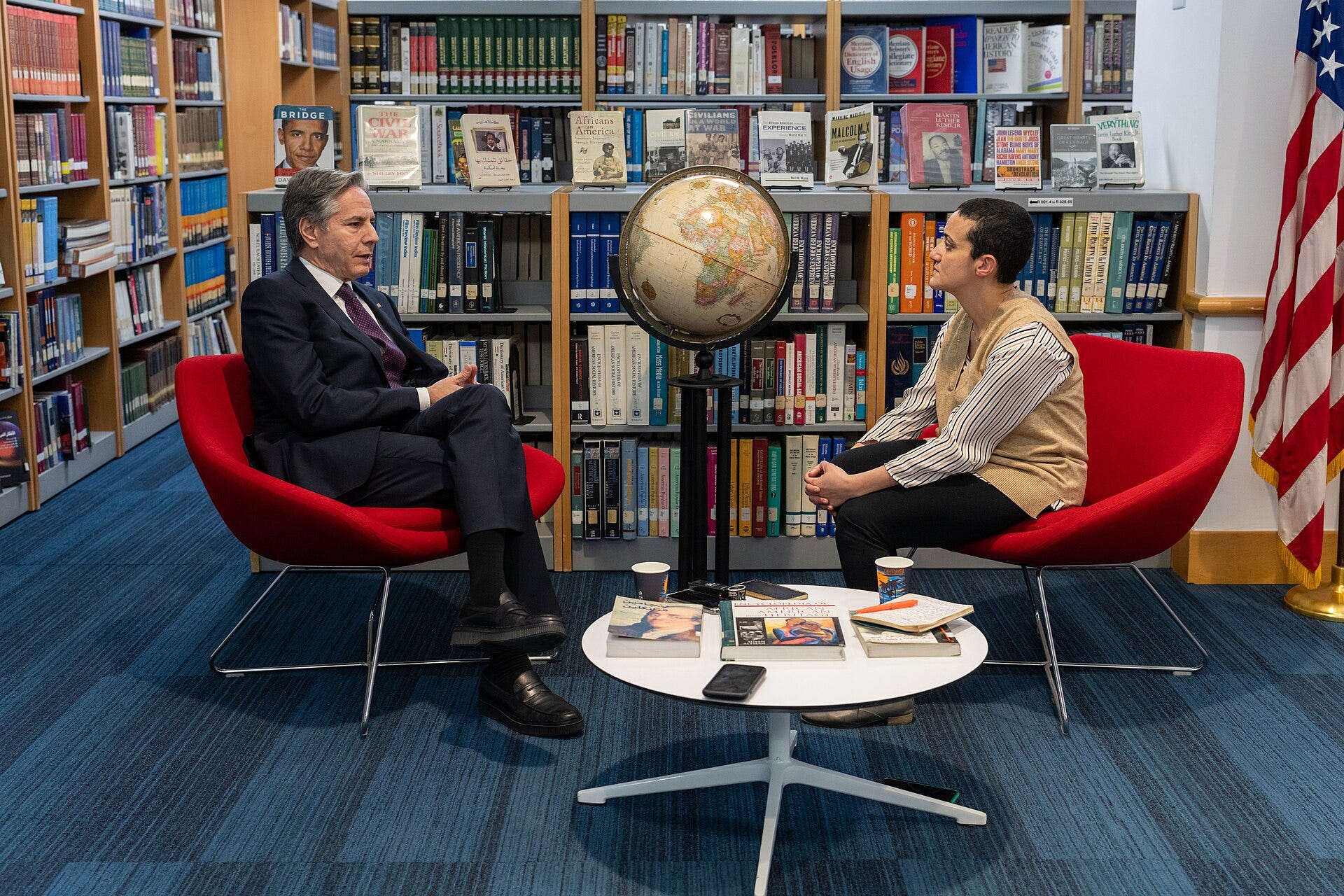
Washington did this under both parties. In 2024, Antony Blinken waived the same conditions and released the full allocation because the Biden administration wanted Cairo’s help mediating the war on Gaza. Egypt’s security cooperation has been bought, every year, with the understanding that its prisons are none of our business.
Europe signed its own deal. In 2024 the European Union committed €7.4 billion to Egypt through 2027, up to €5 billion of it in loans, and has kept paying in tranches. Egypt is a key EU partner in curbing migration. After Mada was ordered closed, the EU’s diplomatic service issued a vague statement that did not condemn Egypt. Timothy Kaldas of the Tahrir Institute put it plainly to the BBC: “Egypt is getting signals from both sides of the Atlantic that human rights and the rule of law are no longer a priority, and they’re testing the limits of that.”
Attalah sees the same calculation from Cairo. Egypt, she told AFP, “is celebrated for being a haven of stability,” and its foreign backers treat stability as something that “can happen by just investing in power and the status quo.” She calls that “the wrong bet.”
Our own countries
Last week much of the world exhaled. Democrats swept the midterms, taking the House and the Senate and flipping seats in places the party hadn’t won in decades. I understand the relief. But the people who decide whether Egypt pays any price for jailing journalists sit in that same Congress, and both parties have signed the waivers. A new majority changes nothing for Lina Attalah unless it chooses to.
The attack on speech runs through our own countries too, and much of it has been about Palestine. Last year, immigration agents detained Rümeysa Öztürk on a street in Somerville, Massachusetts, after the Tufts doctoral student co-wrote a campus op-ed about Gaza. In Austria, the public broadcaster ORF declined to renew Karim El-Gawhary, who had run its Middle East bureau in Cairo since 2004, after years of campaigns against his reporting on Gaza. ORF called it a “generational change.” El-Gawhary says he was smeared as an antisemite and a friend of Hamas for writing about Palestinians as people, and that the campaigns stopped the moment ORF announced he was leaving.
Governments that look away when their own journalists and students are punished for words will not lose sleep over a closed newsroom in Cairo. Egypt’s rulers know it. Kouddous told the Observer the timing was deliberate: “If ever they’re going to do it and not worry about getting pressured from Europe or the US on this, it would probably be now.”
In her words
On Monday, Attalah published her own account in Drop Site News. She was summoned a week before the October 27 hearing and convicted in an afternoon. “Just like that, 13 years of journalism practice had ended in a five-minute judicial performance,” she wrote.
She described a newsroom that kept reporting while the state and its commentators told it to stop. “At Mada Masr, we simply chose to ignore the shouting, and do the work.” On Wednesday she will argue that “journalists should not be jailed, not only as a moral position, but also as a right inscribed in Egypt’s constitution.” She is asking for the charges to be dropped. “Journalists should not be in jail. I should not go to jail,” she told AFP. “The Matsadaash journalists should not be in jail. The rest of the 26 journalists should not be in jail.”
She also described what the courtroom has already taken. “We should be allowed to go back to our newsrooms and not spend our days in courtrooms,” she said. Until the cases are resolved, “there isn’t much journalism.”
To the governments that made this easy
In 2019, when security forces raided Mada and took Attalah away, she was released after a strong response from diplomats, many of whom read Mada every day. “Some very, very high-level calls were made,” Kouddous told the Observer. “That pressure, I think, saved it.” Introducing Attalah’s essay on Monday, he wrote that “global solidarity was crucial in helping to keep Mada Masr alive and Lina out of prison.”
I know that charge. When I was held in prison for 52 days, the authorities there also tried to justify my abduction and imprisonment by claiming I had practiced journalism without a license. Public pressure got me out in the end, as it got Lina out. We have to make it work again.
To the State Department: you waived the conditions Congress wrote to protect people like Lina Attalah, and the arrests followed within weeks. Say publicly that a prison sentence on November 11 will cost Cairo something. To the new Congress: the next waiver goes through you. Hold hearings on this one.
To the European Union: you are paying Egypt in installments. Tell Cairo, out loud, that the closure of Mada Masr and the jailing of the Matsadaash six put the next payment in question.
To London and Ottawa, who gave Mada Masr your Media Freedom Award three years ago, and to Paris and Berlin, whose embassies in Cairo honored Attalah in 2022: send your diplomats to the courtroom on Wednesday, and make the kind of calls that were made in 2019 if you really honor her work, and want anyone to honor you.
What you can do before Wednesday
Mada Masr is asking journalists everywhere to cover the story and to ask their own governments, on the record, whether this crackdown has affected relations with Egypt and what they have done to defend press freedom there. You don’t need a press pass to ask. Call your representatives. Write to your foreign ministry. Share Mada’s work, and say the six names of the Matsadaash journalists out loud.
Nearly 140 press and rights organisations have already signed their names. Mada’s senior editor, Mohammed Hamama, says Egypt’s independent outlets have kept working for years “in part because of the solidarity of their fellow journalists around the world.” Lina Attalah walks into court on Wednesday. Those calls have to be made before then.
Can't comment on her own post; we were going to ask if it's okay to republish it in UK independent printed newspaper The Light ( https://thelightpaper.co.uk )
Presume it is as they want the story being told, but leaving this here in case.
Peace.
Thank you for reporting on this urgent case, translated in French here : https://zanzibar.substack.com/p/la-derniere-redaction-libre-degypte