


In the Strait of Hormuz, a tanker was hit by an unknown projectile. UKMTO logged it as an attack, and the wires called it a security incident. Hours later, Iran’s Revolutionary Guard claimed responsibility for striking a Togo-flagged vessel attempting an “illegal passage.” And in Washington, Donald Trump just told reporters he was nearing a major choice on whether to “annihilate” his Iranian foes, adding that “anything could happen.”
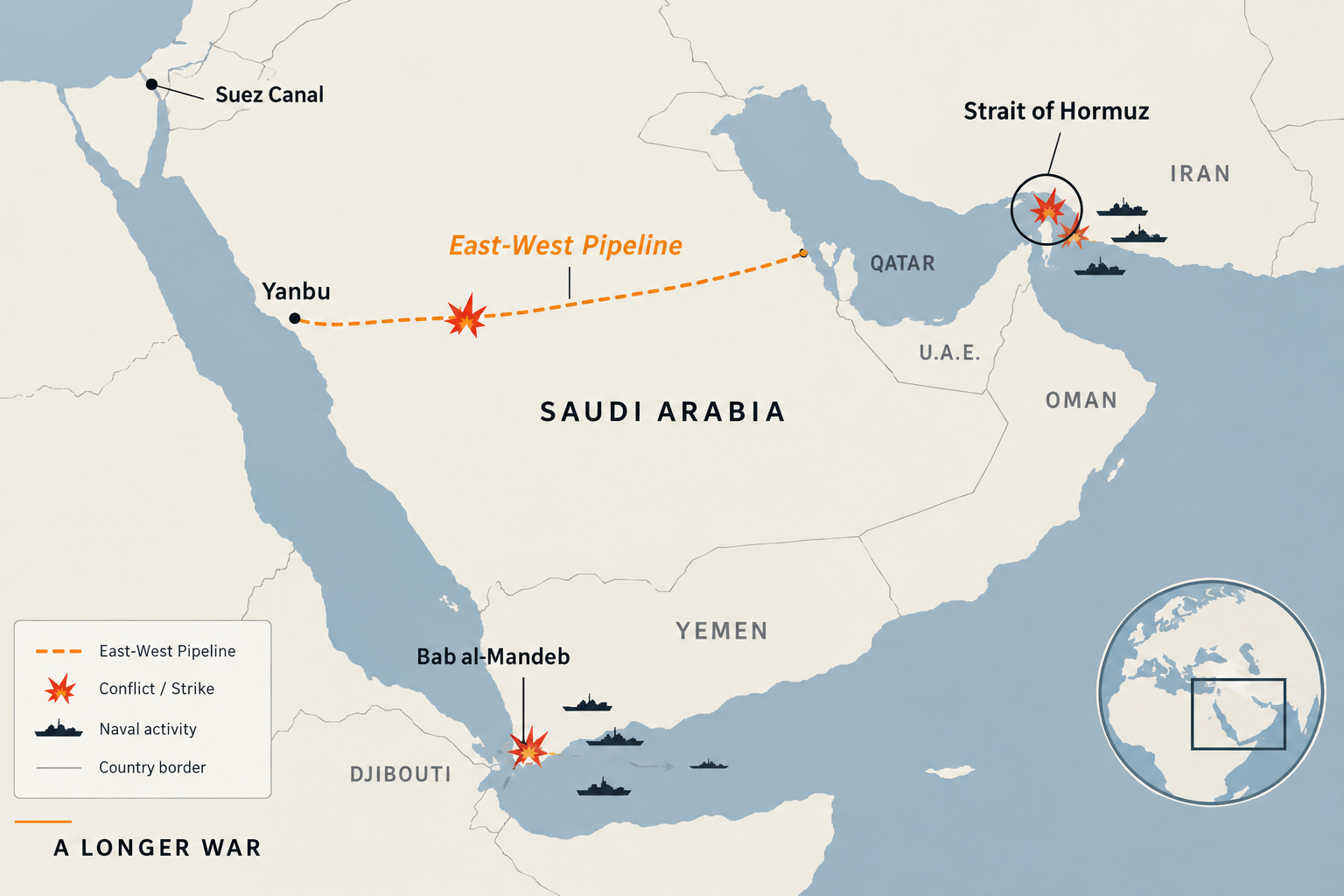
While the president weighed annihilation, Saudi Aramco was weighing diesel prices in the Mediterranean. For weeks, the world’s largest exporter has been bidding through Platts for thousands of tons of fuel it used to sell. On Friday, the company told European refiners they will be allocated no crude at all in October. Aramco sells the world its fuel. This autumn, it is buying some back.
Its own plants keep getting hit. The Houthis say they struck a refinery at Yanbu this week, after going at the Jazan processing plant down the same coast. The East-West pipeline that runs crude across the kingdom, the line built so Saudi oil would never have to pass through the Strait of Hormuz, has been shut since drones hit its pumping stations on September 10. At least three European refiners have had late-September cargoes cancelled or pushed into November. Poland’s Orlen, which takes roughly 40% of its crude from Aramco, is out buying North Sea barrels instead.
Bloomberg dates the buying to the weeks before the September 10 strike, which points past the pipeline and toward the targeting of fuel plants themselves, which the Houthis have been hitting for months. Aramco has yet to say how much refining capacity the kingdom has lost and for how long.
On Thursday JPMorgan’s commodities team told clients it no longer has a baseline view of the oil market, the first time since this war began. “We simply don’t know how to model the endgame,” the strategists wrote.
The bank had once assumed there were economic red lines this administration would not cross: oil above $100 a barrel, gasoline near $5, the ten-year Treasury above 5%. Six months on, most of those lines sit far behind us. The bank that prices risk for a living has stopped pretending it can price this.
Chevron’s chief executive got there three days earlier, in Austin. Mike Wirth said the mechanisms that cushioned price and supply risk “have largely now played out,” and the system no longer holds the buffers it had when the fighting started.
Asked where prices go from here, he said he wished he could point to a reason things would ease and could not. Executives at ExxonMobil, Phillips 66, and Marathon Petroleum described the same exhausted system.
Administration officials are somehow still calling it a disruption, a word they have used that word since February, through a closed strait, a bombed pipeline, and the highest diesel price this country has ever recorded. Refining is the tighter constraint. American plants have served as the world’s refinery of last resort for months, running above 95% and touching 97.8% in early September, among the highest sustained rates in a quarter century.
On Sunday afternoon ExxonMobil’s Joliet refinery outside Chicago lost all power, tripped its safety systems and shut down the entire plant, throwing flames and black smoke over Will County. Joliet runs 264,000 barrels a day, roughly 6% of everything the Midwest can refine, and turns out about 11 million gallons of gasoline and diesel daily by Exxon’s own accounting.
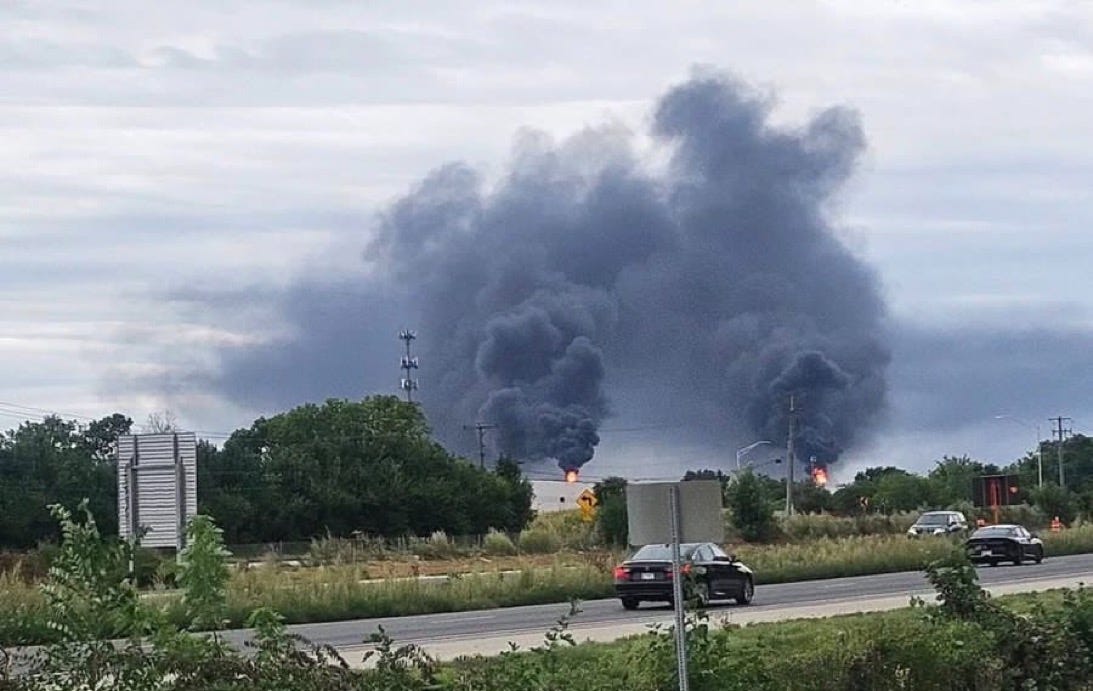
Power came back within four hours and IIR Energy expected a return to normal service by the end of this week. A storm knocked Joliet offline in July 2024, it stayed down for weeks, and the EPA had to issue emergency fuel waivers for Illinois, Indiana, Michigan and Wisconsin to keep gasoline moving.
The Federal Reserve raised interest rates on Wednesday for the first time since July 2023, on a 12-0 vote, to a target range of 3.75%-4%. Sixteen of eighteen participants expect another before the year is out.
Fed Chair Kevin Warsh told reporters the Fed cannot affect “any individual price,” naming oil and groceries, and said what it can do is stop those price changes from producing second and third order effects. Nobody can make the war cheaper, so the plan is to make you poorer.
Gasoline rose 3.9% in August and accounted for a third of the month’s entire Consumer Price Index increase. It is 27.4% higher than a year ago. Over Labor Day, regular averaged $4.14 a gallon, past the 2012 holiday record of $3.82. It is around $4.37 now.
Diesel, which keeps the U.S. moving, broke its 2022 record in early September and reached $6.23 on September 14, up 69% from $3.69 a year ago. Today, diesel prices in the U.S. reached yet another record high, averaging $6.44 a gallon (3.8 litres), according to the American Automobile Association. California is at $7.98. In Iowa, where the corn is coming in right now, a farmer fills his tank at $5.88, two dollars and change above what he paid last September.
Brown University’s tracker puts the diesel run-up alone at $46.7 billion in added fuel costs since the war began, that’s about $357 a household.
For seven months these numbers have been filed under temporary. The rate hike closes that file. A central bank tightening into a supply shock has decided the shock is permanent, and has decided who pays for it.


I am not an economist. But you do not have to be one to read a bank saying it cannot model the endgame, an oil man saying the buffers are gone, and a central bank raising the price of money in the middle of a war, and understand that nobody in a position to know expects this to get better.
On Thursday the State Department approved the sale of 48 F-35s to Saudi Arabia, with 49 engines, at an estimated $24.3 billion. The sale, the department said, “will not alter the military balance in the region.” That declaration comes at a time when drones launched from Iraqi territory struck pumping stations on the East-West pipeline on September 10, and Riyadh shut the line the next day. The pipeline carried up to five million barrels a day from the eastern fields to Yanbu. The strike stranded an estimated 2.5 million of them. Yanbu’s tanks held about four days of crude at normal withdrawal rates. The IEA put Saudi crude supply at its lowest level in more than three decades.
The East–West Crude Oil Pipeline went down on a Thursday. By Friday morning the Houthis had taken Perim Island, the volcanic rock that splits Bab al-Mandeb into its two shipping lanes, finishing a sweep down Yemen’s western coast. Yahya Saree announced that passage was safe for everyone except Saudi vessels. Riyadh spent a decade building ways around the Strait of Hormuz and lost the pipeline and the Red Sea exit inside thirty-six hours. Hence the tankers meeting each other off the Omani coast. Hence Aramco in the Mediterranean, bidding on somebody else’s diesel.
Which brings back Friday’s notice. Term contracts are the paperwork of energy security: a refinery signs one so it never has to wonder where next month’s barrels are coming from. European OECD countries were taking 577,000 barrels a day from Saudi Arabia as of June. In October there are none, at any price.
So Europe goes shopping. Orlen alone has put out more than ten tenders this week, each one a European refinery bidding against the others for the same replacement cargo, in a market where the physical barrel already trades above $130 and American plants are running at 97.8%. Then winter. Aramco is in that market too, bidding for diesel in the Mediterranean, competing with the customers it just stopped supplying.
Before the war more than 120 vessels transited Hormuz each day. This month it runs in the low double digits. American officials call the periodic strikes around the waterway “mowing the grass.” It is a phrase borrowed from lawn care, chosen to describe a thing you do forever because the alternative is admitting it does not end.
On Thursday UKMTO, the Royal Navy body that warns merchant shipping, issued Warning 137-26. Classification: ATTACK. A vessel hit 16 nautical miles northeast of Khasab, crew safe. Warning 133-26, the week before, logged four projectiles hitting two vessels and setting one on fire. Khasab is Omani, in the southern corridor this administration has spent months calling safe to transit.
The same day, Mohammad Bagher Zolqadr, adviser to Supreme Leader Mojtaba Khamenei, said Iran will not reopen the strait until Trump and Netanyahu are out of power. In August his conditions were an end to American operations, a troop withdrawal, sanctions relief. Now it is regime change. This all landed the same day Trump said Iran wanted a deal.
Markets do not need Zolqadr to speak for the state. All the need to do is look at the calendar and find no end-date in sight. Brent futures fell to $104.82 on Thursday after Saudi Arabia began offering Asian refiners extra cargoes by ship-to-ship transfer near Sohar. Futures are for barrels months out. Dated Brent is what a European refinery pays for a cargo arriving this week, and by Tuesday that assessment had pushed above $130 as buyers chased replacements for their cancelled Saudi barrels.

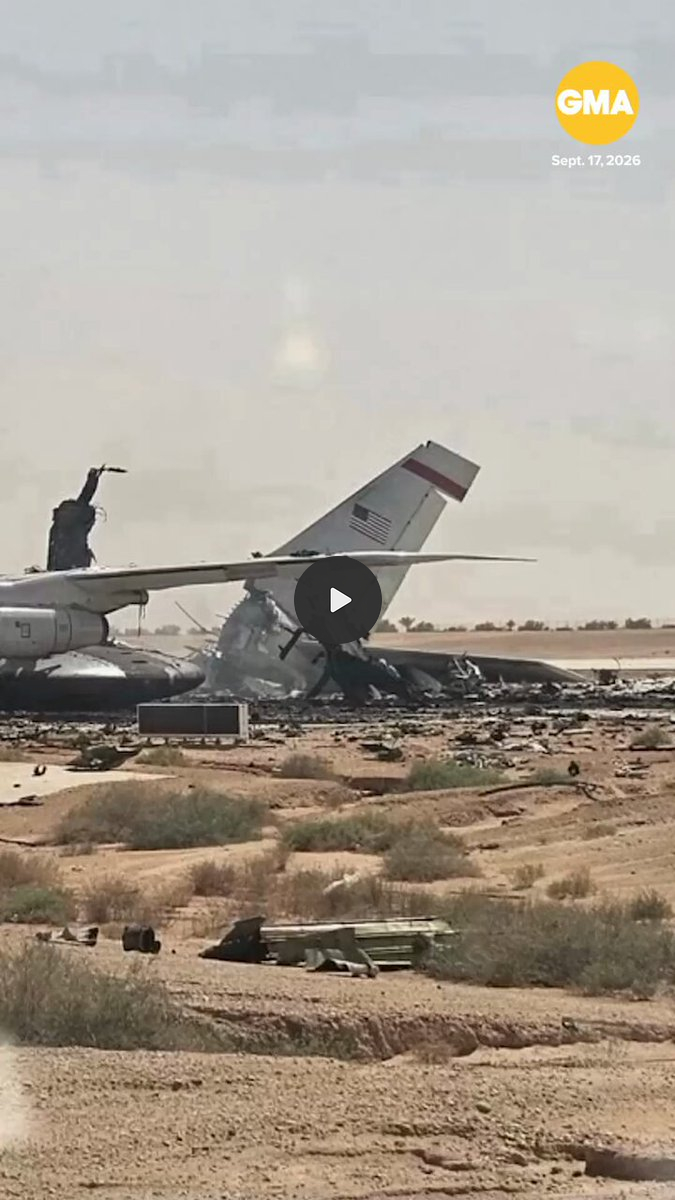
Images taken by American service members and passed anonymously to CBS News this week, obtained independently by ABC, show a Boeing E-3 Sentry with its rear section torn open at Prince Sultan Air Base in Saudi Arabia. Barracks hollowed out. Tents shredded. Trailers ripped apart at bases in Kuwait. A senior service member told ABC the facilities have been “irreparably damaged” and that rebuilding them would run for decades. He said he did not think Americans had any idea what their bases were absorbing. Another described standing there with his eyes closed, getting punched in the face.
The fastest route from an American air base to the American public ran through an anonymous leak to a television network. The Pentagon declined to comment.
A report released Monday found hundreds of buildings and structures damaged at American posts in Kuwait, Bahrain, Qatar, the UAE, Saudi Arabia, Iraq, Oman and Jordan, with dozens of US aircraft destroyed or damaged. The Defense Department put the cost of the war at $33.4 billion as of June 29, excluding infrastructure repair. The Congressional Budget Office says $38 billion. Since February 28, eighteen American service members have been killed and 824 wounded, and the House has voted three times to end it.
A Fox News poll taken September 11 to 14 found 71% of registered voters think the administration has no clear strategy for ending the war, including 83% of independents and 43% of Republicans. Sixty percent call the military action wrong against 37% who defend it, widening the margin from 17 points in June to 23 now. Forty-seven percent say the conflict will leave the country less safe in the long run, up from 39% in April.
Daron Shaw, the Republican pollster who runs the survey with a Democratic counterpart, noted that the public normally rallies behind a president during a foreign crisis and has not done so here, partly because Trump has never consistently made the case for the war. The president’s job approval stands at 39%, and his rating on foreign policy is underwater by 24 points because the war reaches most Americans now as a bill.
Some day the word temporary will be quietly retired, and the people who used it for seven months will not remember using it. There will be a consensus that the war went on too long, that the costs were regrettable, that in hindsight the signals were there. Seven months of war has moved the horizon from weeks to years, and the only institution still describing it as a “temporary disruption” is the one that started it.
And yet, the oil companies are still seeing record profits, right? We the people will pay, but they will not.
this American government is a freak show packed with deranged, power‑drunk lunatic characters who have no business steering a country. It’s gross watching a whole machinery of so‑called leaders hollow out the United States like termites chewing through rotten wood. The incompetence is so loud, so filthy, so shameless that it feels like the nation handed its future to a circus of chaos‑addicted clowns. It’s sickening to witness.