


Iran isn’t buying what Marco Rubio is selling.
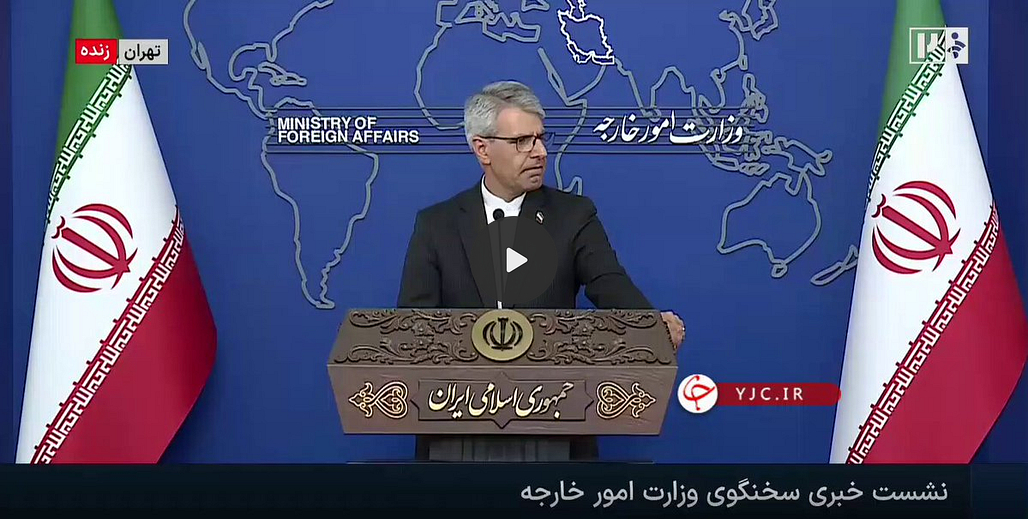
Hours after the secretary of state told reporters Sunday night that Washington remains open to a deal with Tehran — “It has to be real,” he said, pointing to Iran’s attacks on three tankers last week instead of the promised reopening of the Strait of Hormuz — Iran’s Foreign Ministry made clear it isn’t interested in whatever version of diplomacy Rubio is offering. Spokesman Esmaeil Baghaei told reporters Monday that when Washington talks diplomacy, it means “imposition, intimidation, threats and sanctions.” He added that US strikes have made the memorandum of understanding that paused the war all but dead on Iran’s end.

Then Iran shifted the aim of it’s barrels at the Pentagon. Baghaei warned the US would face consequences for any military venture against Kharg Island, the coral strip that carries 90 percent of Iran’s oil exports, before adding that some in Iran’s leadership are “counting down the minutes to welcome” a ground invasion.

The Revolutionary Guard backed the line with hardware talk. A statement carried by Tasnim said IRGC ground forces are running on “up-to-date equipment, continuous training, and improving operational capacity” and sit at the highest level of readiness against infiltration. Brigadier-General Ruhollah Nouri, the deputy ground forces commander, said his troops are prepared to “neutralize any enemy incursion immediately.”
But Iran’s response is no longer confined to defending its own territory. In another statement addressed directly to the people of Kuwait, the Revolutionary Guard urged them to act against US forces stationed in their country while claiming a new round of drone and missile attacks on American targets there.
The IRGC said its forces had struck US military assets at Ali Al Salem Air Base, including an early-warning radar system. In separate statements, it also claimed to have hit the area where US MQ-9 Reaper drones were deployed, destroying or damaging several aircraft. Those specific battlefield claims have not been independently verified, although Iranian missile and drone attacks on US-linked targets in Kuwait have been independently reported.
More important than the battlefield claims was the political message wrapped around them. The Guard described parts of Kuwait as having been placed under US military occupation and used as a base for attacks in Iran, Iraq, Afghanistan and Palestine. It declared that Kuwait “must not be a safe haven” for the US military and called on Kuwaitis to remove American forces “by any means possible.”
That is a provocative escalation of its own. Tehran isn’t simply warning Gulf governments that hosting US forces carries a military cost, it is going further in appealing over their heads, to their populations, in hopes of transforming the American presence from a security arrangement into a domestic political liability. The message to Washington is that another attack on Iran will not remain neatly contained between two militaries. The bases, governments and societies that make the US regional footprint possible will all be pulled further and deeper into the confrontation.
Trump has floated seizing Kharg three separate times since March and backed off twice, each time once the cost became concrete: a global oil shock, an occupying force stranded 20 miles offshore, and troops exposed to Iranian missiles and drones with no easy route for reinforcement or resupply.
US assessments say Marines could land on the island within hours. It is an export terminal, not a fortress. Staying is what gets expensive. Iran has reportedly already mined the approaches and moved air defenses into place for exactly this scenario.
In that same briefing, Rubio pointed to what he called a “growing split” inside Iran, between hardliners still pushing the fight and factions worried about the economy, which coincidentally is the same gamble Baghaei is making about Washington, just pointed in the other direction.
Both sides are betting the other one folds first. That's the actual risk in a stand-off like this: both sides can be confident enough in their own bet to keep pushing until somebody tests it. Trump has stood down twice already. Iran is wagering he does it a third time. If either side misjudges how much of this is bluff, the island stops being leverage and triggers a return to a disastrous war which nobody in Washington or Tehran can walk back.
Rubio and Trump profit, no matter what. Hegseth gets to continue to make stupid decisions and say stupid manly stuff while beating his chest. Everybody else suffers or dies. In the end, the oligarchs and those who invest in war-making profit, and that includes any number of the members of Congress, and, likely a number of Supreme Court Justices. The levels of immorality and inhumanity are astounding and abhorrent.
“Iran is wagering he does it a third time.”
No, it is not. The IRGC are saying, “Make my day, punk”.