



In the past few days, Iran has become the stage for a drama as layered as it is urgent. The Iranian state’s announcement of a foiled CIA plot coincides with streets filled with protestors, a communications blackout, and a flurry of international reactions. Airlines like Qatar Airways and Emirates have canceled flights to Tehran, a stark indicator of how the world is bracing for what might come next.

Horrifying footage from Kahrizak Medical Forensic Center in Tehran shows bodies lined up in body bags as families arrive to identify the dead.

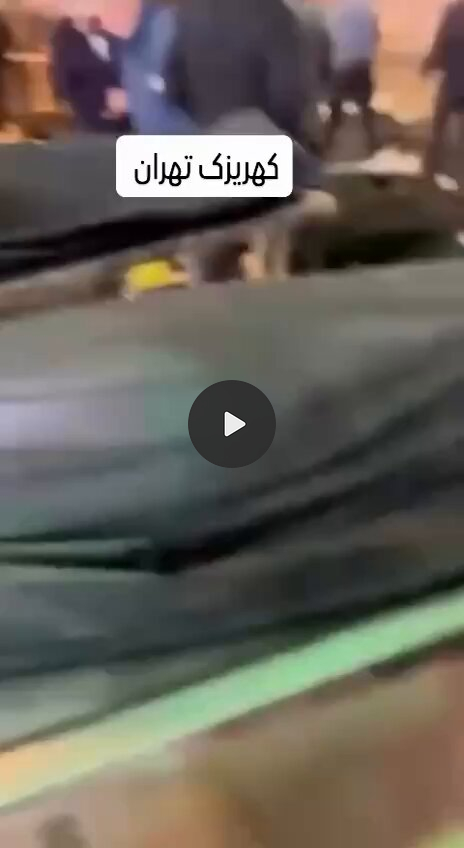
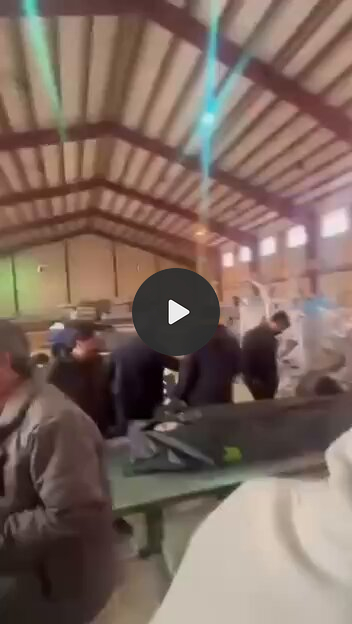
According to BBC’s Bahman Kalbasi, hundreds of protesters have been killed by the government in the last 72 hours.


Meanwhile, the Mossad’s brazen use of X in Farsi to urge Iranians into the streets is a reminder that this is not just about local dissent. It’s about a global stage where intelligence agencies play provocateur. And when a viral photo of a supposed Iranian protester, we see the machinery of narrative manipulation at work.


Add to that the likes of Lindsey Graham posting on X to the Iranian people that “your long nightmare is soon coming to a close” and that “help is on the way.” Such rhetoric, coupled with reports that the U.S. is considering air strikes, signals that the empire’s hand is as visible as ever. It’s an old playbook: external powers framing themselves as saviors while nudging a nation toward a predetermined outcome.


As Danny Citrinowicz, the former head of the Iran branch at Israel’s intelligence services points out, there is a flood of disinformation suggesting the regime is on the brink of collapse, but the reality is more complex.
Khamenei’s recent speech signals a harsher crackdown, and while the regime can’t fully stop the protests even by cutting off the internet, it still has a stable support base.

Over 13 million people voted for an ultra-conservative candidate in the last election, and the Revolutionary Guards remain deeply committed. This is not a monolith about to crumble overnight.
Shows like “Tehran” and “Fauda,” produced by Israeli creators, subtly reinforce a certain worldview. They’re part of a broader cultural apparatus that presents Middle Eastern conflicts through a lens that can normalizes ongoing policies of occupation or intervention.
Apple TV+’s Tehran aired the first episode of Season 3 on January 9. This timing does not drift into this moment by coincidence. The series was created by Israeli writers Moshe Zonder, Dana Eden, and Maor Kohn for Israel’s public broadcaster Kan 11 before being picked up and globalized by Apple.
It follows a Mossad hacker-agent operating inside Tehran to sabotage Iran’s nuclear program — a premise that mirrors the very real strategic obsessions of Washington and Tel Aviv. Tehran belongs to the same genre and political lineage as Fauda, another Israeli-produced hit that turned counterinsurgency, occupation, and undercover operations into binge-able drama for Western audiences.
These shows do more than entertain: they quietly normalize a worldview in which Israeli intelligence is rendered intimate and heroic, while Iranian, Palestinian, or Arab society becomes a backdrop of danger, intrigue, and dysfunction.
When millions of people around the world absorb these stories through platforms like Apple, they are being taught how to feel about power, surveillance, and intervention. In a moment when Mossad is openly tweeting in Farsi to Iranian protesters and U.S. politicians are hinting at strikes, Tehran functions less as escapism than as cultural reinforcement for a real geopolitical project.
And let’s not forget the historical echoes. In 1953, the U.S. and the UK orchestrated a coup that replaced Iran’s democratic government with a regime that served Western interests. Today, as Israel’s Heritage Minister openly acknowledges that Israeli agents are operating inside Iran, and as the Wall Street Journal reports on possible U.S. air strikes, we are witnessing the same old playbook of external interference.
Iran’s government is facing unprecedented demonstrations, perhaps the most serious since the 1979 revolution, but it still has significant pockets of support. The Revolutionary Guards are unlikely to defect, and the regime is not a monolith. There are internal struggles about how to respond, and while there is no unified opposition inside Iran, there is fear of what might follow if the regime collapses.
The question is not just about whether life imitates art or art imitates life. It’s about how media, history, and geopolitics intertwine to shape the narratives we believe. We must reject the easy narratives and recognize the complexity.
There is a moral tension that many people watching Iran right now feel but rarely hear articulated clearly: you can stand with Iranians who want dignity, economic relief, and political voice while also refusing to cheer for a foreign-engineered collapse. Iranians have lived under repression, surveillance, and economic strangulation for decades, and their demands are not abstractions they are about rent, medicine, censorship, and the daily humiliations of a closed system.
Those struggles belong in the same family as Palestinian demands for freedom from siege and apartheid. Both are fights against structures that decide whose lives are disposable and whose are protected.
A politics of liberation that stops at borders, or that excuses one people’s suffering because of another people’s rulers, is hollow. Solidarity has to mean believing that Iranians, like Palestinians, deserve self-determination without being turned into pawns in someone else’s war.
But it is precisely here that the danger lies. A regime-change collapse in Iran would not be a neutral act of “liberation.” It would be a geopolitical windfall for outside powers that have spent decades trying to neutralize Iran as a regional counterweight.
Israel would gain a freer hand in Gaza, Lebanon, and the West Bank without a hostile power backing resistance movements. Washington would weaken a state that has resisted U.S. dominance in the Gulf, challenged the sanctions regime, and refused to fold into the architecture of American-led order.
Energy markets, arms sales, and regional alliances would all be reshuffled in ways that favor Western and Israeli power, not Iranian workers or dissidents. That is why intelligence agencies tweet in Persian and senators promise “help.” Not because they suddenly discovered Iranian human rights, but because a fractured Iran would serve their strategic interests.
The tragedy is that the real and just grievances of Iranians risk being hijacked by forces that have no intention of delivering anything that looks like genuine freedom.
In the end, the story is as tangled as it is telling. Yes, nearly 13 million Iranians cast their votes for the most conservative party in the last election, and that’s not a detail we can neatly ignore. The regime’s roots run deeper than the headlines often admit, and those who imagine that Mossad provocateurs or Western-backed militants can easily break that base are missing the fuller picture.
Yet the air is thick with paradox: while a new online betting market boldly claims there’s a 60% chance Iran’s Supreme Leader will be out this year, and former U.S. officials openly nod at Mossad’s role, we see a stage crowded with arsonists who still insist their fires are someone else’s delusions.


I’ll leave you with this: Philip Giraldi, a former CIA officer who spent years inside that machinery, put it more bluntly than most ever will, saying the quiet part out loud.
“If the United States goes to war with Iran in the near future, it will not be because Tehran actually threatens America. It will be because Israel and its powerful lobby in the U.S. have succeeded in creating an essentially false casus belli.”
World actors are exploiting and fuelling the situation brought about by USA sanctions and Iran leaders own mismanagement. May this pass quickly with a better outcome for Iranians. Whichever the case, they should never make a pact with the devils USA and Israel.
Psyop to justify war