


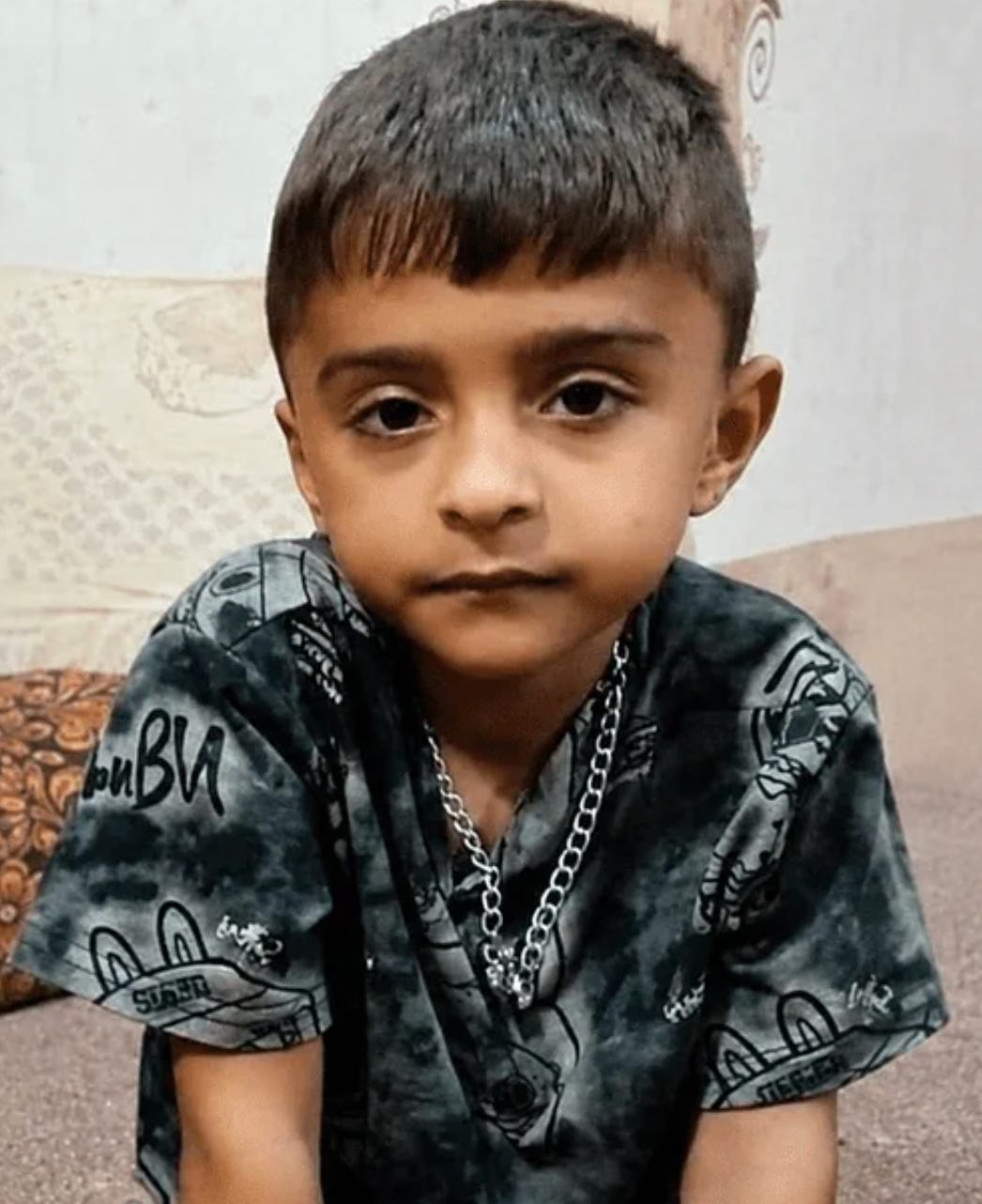
Early Tuesday morning in Kuhestak, a fishing town on Iran’s southern coast, a wedding was underway when a missile came through the roof of a house nearby, tearing a five-foot hole in the ground. By the time the dust settled, officials in Hormozgan province were reading out names: Amir Ali Karimi, six years old, and three adults beside him. Somewhere between fifty and seventy more were wounded, most of them women and children, carried to a hospital in Minab because the local clinic couldn’t hold them.
Footage shows at least 6 explosions in Kuhestak, which also hit the wedding venue.
By afternoon, researchers combing through the wreckage had traced a scorched thermal battery, a shard of missile casing, and a piece of cable raceway to a Boeing-made cruise missile called the SLAM-ER, which the manufacturer describes as having “surgical strike capability.”


The word surgical matters to me less as forensics than as an attempted alibi by the U.S. It lets a wedding tent full of children get filed under precision instead of under the decision that put a missile over Hormozgan province in the first place.
There are two wars happening. One is the actual war, still killing people in Hormozgan province. The other is a battle of narratives, a fight over who could sound most reasonable while a child was still being pulled from the rubble, over whose account would hold up as the record of what happened and why. While Gulf foreign ministries are phoning in their concern about escalation and flight delays, commentators are continuing to float theories as to whether and why Riyadh had been spared this round.
A wedding quickly enters the conversation and leaves it just as quickly, folded into the language of tit for tat, as though a missile fired by the best funded military on earth and a missile fired by an exhausted, blockaded state were two even weights on the same scale. One wire report on the strike settled, in the end, on the fact that what exactly had been hit was “not immediately clear,” a sentence built to hold an entire war at arm’s length.

The BBC found its own version of that distance: plenty of paragraphs about the strikes, precious few sentences where the words “United States” sit anywhere near the word “killed.” Even Iran’s own foreign ministry, for all its self-interest in the telling, has made this point too: its spokesman said that more dangerous than the bomb itself is the normalization of bombing.
This is after all, how the war began. It started on February 28, when the United States and Israel killed Iran’s supreme leader in strikes that also hit a school in Minab, the same town where Kuhestak’s wounded are now recovering. Iranian officials have cited tolls for that strike ranging from dozens to well over a hundred children, the kind of discrepancy wars produce when no one impartial is left to count. Washington has since suggested it was likely responsible but blamed outdated intelligence rather than intent. Either telling ends the same way. More than 100 children killed at the start of the war, and children dying again more than six months later, this time at a wedding party meant to celebrate two people starting a life together.
Central Command, when asked about Kuhestak, didn’t deny anything so much as redirect. A spokesman noted the reports were coming from Iranian state media, then added, unprompted, that the US military doesn’t target civilians the way Iran’s Revolutionary Guard does. They accomplished two moves with one sentence: they cast doubt on the dead, then question the character of the state you just struck, all without once naming the six-year-old Hormozgan’s own governor’s office had already named.
Trump warned that if Iran retaliates for the strike, it will be hit again, harder. Each failure has bought permission for something larger. Most people cheering this on from a distance don’t actually want to see Kuhestak: the building with its walls blown outward, children carried into triage with dust still in their hair, a mother, if she survived, learning what a five-foot hole in her floor used to be. The vocabulary exists so they don’t have to. Precision, de-escalation, collateral, tit for tat, words stacked like sandbags, high enough that nobody saying them has to look over the top and see what’s actually on the other side.
But the video exists. The names exist. Amir Ali Karimi existed, six years old, at a wedding, until a missile decided otherwise. However this war ends, whatever ceasefire eventually gets signed and whatever anniversary gets marked, that will still be true.
Sanctions only work if the country being squeezed believes the pain ends the moment it complies, and Iran has stopped believing that. Every signal out of the U.S. points toward the same outcome regardless of what Iran does: disarm the country, break the government, maybe partition it. With no offer on the table that leaves Iran intact and left alone, escalation becomes the only leverage it has left, so it keeps striking back even though most of what it hits barely registers as a military matter, more proof of life than a real threat to anyone’s war plan.
What will actually decide how this ends sits outside that exchange of fire, in a security order built around American power that has held the region together for half a century and is now coming apart, with Saudi Arabia and the rest of the Gulf quietly building ties elsewhere, no longer willing to bet everything on American protection.
Modern warfare is nothing but slaughter of civilians, it's not even war anymore. But just as shocking is how we, the public, have been conditioned by narrative. Speaking of other people as collateral, scrolling past the body parts and dead children as we sip our coffee. Something's gone horribly wrong here, and I don't know if there's any return. As a collective, I think we've passed that threshold, but individually, there's still hope that our humanity will prevail.
RIP sweet innocent little Iranian boy Amir-Ali Karimi! We humanitarians will avenge you!