



Within twenty-four hours, Israel announced three major agreements: A weapons export deal with Germany worth more than $6.7 billion — the largest in Israel’s history. A security deal with the United Arab Emirates worth $2.3 billion, the second-largest in Israel’s history. And a gas deal with Egypt worth $35 billion described by Benjamin Netanyahu as “the largest gas deal in Israel’s history.”
Arms. Security. Energy. Three pillars of legitimacy being unveiled as Israel continues it’s policies of ethnic-cleansing, apartheid and genocide in the West Bank and Gaza.
Cairo has positioned itself publicly as a critic of Israel’s genocidal war on Gaza and yet due to its deepening energy crisis they signed with Netanyahu who framed the deal which sells stolen Palestinian gas to Egypt as strengthening Israel’s role as a regional energy hub, announcing that roughly half the revenue would flow directly into state coffers.
To describe this as shameful would be an understatement and not very productive, given that many so-called leaders cannot be shamed into action. Still, the question remains: Why are regional Arab states strengthening Israel’s role in the region while they commit genocide against the Palestinian people? Do they not believe Israel is committing genocide, or do they not care?
The agreement itself was signed earlier in August but delayed for months by internal Israeli disputes over pricing and domestic political concerns. Those delays reportedly drew pressure from Washington, which pushed Israel to finalize the deal as part of a broader regional cooperation framework. This pressure was significant enough that the U.S. Energy Secretary at one point canceled a visit amid the stalemate. Egypt did not publicly confirm the deal at the time.
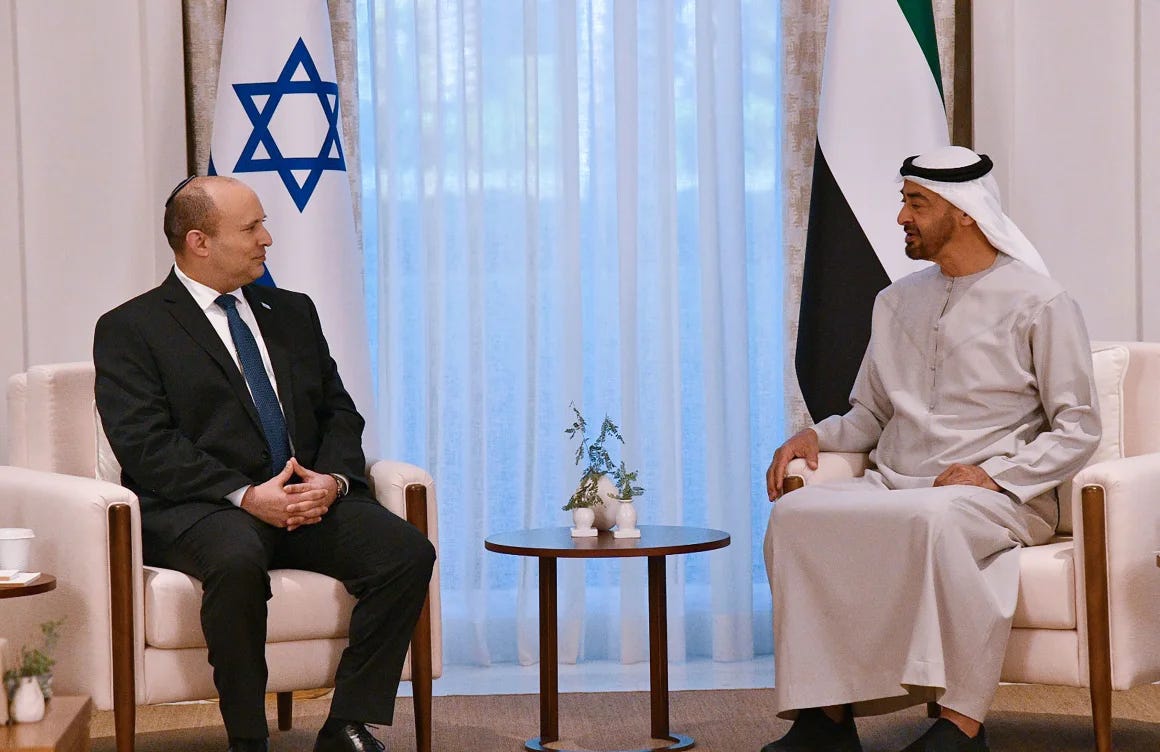
What matters here is the pattern. Within hours of mass death, the machinery of integration accelerated. Netanyahu — a man wanted by the International Criminal Court for war crimes and who continues to orchestrate those crimes — stands at the center of it all, hinting that more announcements would soon follow.
Israel’s ongoing genocide in Gaza demands isolation, not normalization. This is investment in a post-war future being built atop a growing pile of unburied bodies.
I want to be wrong about this.
I want there to be an interpretation of these deals — taken together — that does not collapse under the weight of the moment in which they were signed. I want to believe the timing could be incidental, and the consequence accidental. But these agreements entered a world already shaped by an architecture of death and destruction stretching across Gaza and the occupied West Bank. And in such a world, meaning tends to attach itself whether we invite it or not.
So the unavoidable question becomes: what does it mean to proceed as though this is normal?
The World This Deal Entered
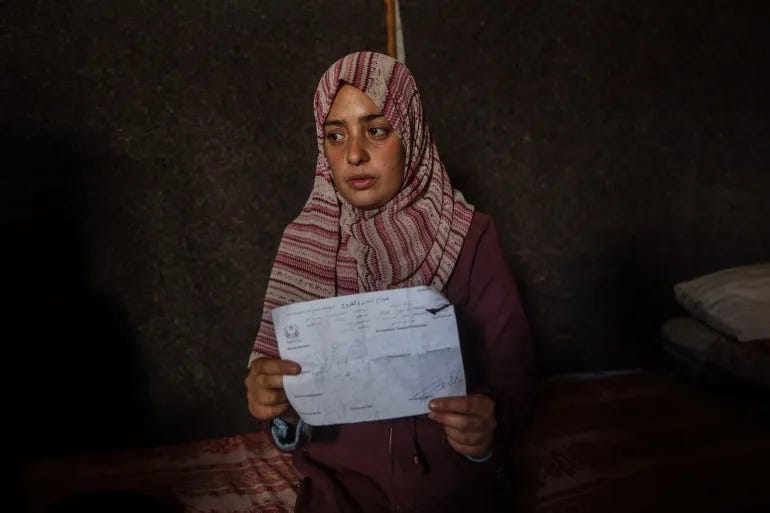
In Gaza, another baby froze to death. His devastated mother Eman, 34-years-old, still cannot believe she lost her baby, Mohammed, alive for just 14 days. Amid the devastation left by Israel’s genocidal war on Gaza, she simply wasn’t able to keep him warm enough.
His body could not generate enough heat inside a tent never meant to survive winter rains. And the materials that might have kept him alive remain restricted by Israel at the crossings.
This week, in Jabalia, Israeli forces killed a sixteen-year-old boy named Zaher Shamiyya. He was shot and left bleeding in the street. His body resisted briefly. Then an Israeli tank advanced and crushed him beneath its treads. The act carried the belligerent confidence of something done without fear of consequence.
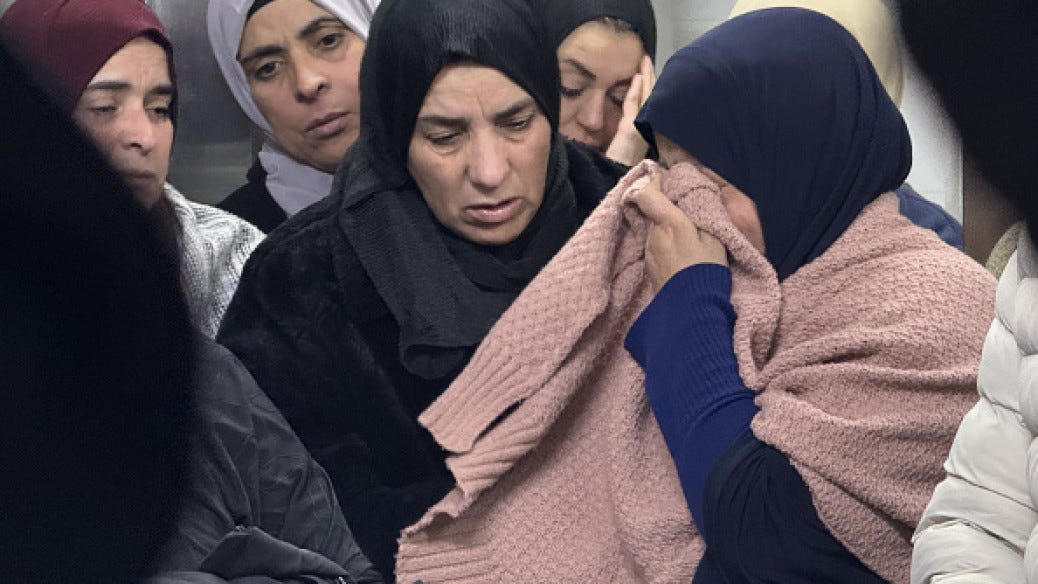
In Gaza City, civil defense workers recovered at least 45 bodies from a single building long after it had been destroyed. The dead waited days for someone to return for them.
In Jerusalem, Qays Haddad, a Palestinian citizen of Israel, went to work as a security guard at Teddy Stadium. Then, a group of 13 Israeli police officers beat and abused him.
One officer told him, “An Arab won’t search me,” as he started beating him. This hate-driven violence against Palestinian citizens of Israel has reached an unprecedented level.

In the West Bank this same week, Israeli forces shot and killed a Palestinian teenager near Bethlehem for allegedly throwing stones. Settlers, accompanied by soldiers, wounded five members of a Palestinian family in Jericho. Raids swept through Jenin, Nablus, and Tulkarem, leaving dozens detained and homes damaged.
These are the daily conditions under which the so-called “peace” deals were signed.
So again: what does it mean to proceed as though this is normal?
What Has Already Been Said
The term genocide was coined by Raphael Lemkin, a Jewish Polish lawyer who lost much of his family in the Holocaust. Lemkin described genocide not as a single act, but as a process — one that destroys a people’s ability to live, reproduce, remember, and remain.
That framework now shadows Gaza. The Lemkin Institute for Genocide Prevention has concluded that Israel’s actions meet this definition. Francesca Albanese, the UN Special Rapporteur on the occupied Palestinian territory, has said the same, warning that states supplying arms may share responsibility. Long ago, the International Court of Justice found that Palestinians face a plausible risk of genocide and ordered Israel to prevent genocidal acts. The killing did not pause. The UN General Assembly, by a vote of 139 to 12, just demanded unrestricted humanitarian access and compliance with international law. Yet Israel’s siege remains intact.
These judgments exist. They sit in the open. They accumulate without resolution. Which raises another question: how are such findings meant to matter?
The Ceasefire That Does Not Close the Wound
We are told there is a ceasefire.
Yet satellite imagery shows Israeli forces continuing to demolish civilian buildings in Gaza during this period. Israeli troops are carrying out repeated raids across the West Bank, arresting dozens, including children and former detainees. Settler attacks have increased, not receded, as villages are entered at night and families are assaulted under military protection.
Violence has not ended since the so-called ceasefire. It has simply been redistributed. And there are still 9,230 Palestinian hostages held in Israeli detention facilities — many without charge, many subjected to abuse, many absent from public accounting.
This is what “de-escalation” actually looks like on the ground.
And So the Questions Remain
It is within this context that Germany deepened its arms supply, the UAE its security cooperation, and Egypt its energy dependence.
What does it signify for states — Arab and Western alike — to proceed with such agreements at this moment?
What does it mean when the largest gas deal in Israel’s history is concluded while tents collapse in the rain and children freeze to death?
If arms, security, and energy agreements are meant to express trust and shared direction, what direction is being affirmed here?
If they signal confidence in a partner’s conduct, what conduct is being endorsed?
And if this is merely business, what does it say when business proves resilient to mass death, court rulings, and the testimony of the dead?
Does normalization during catastrophe function as neutrality, or does it become something else entirely?
The Mechanism That Keeps This Going
What allows this to continue is not ignorance. The images circulate freely. The names are known. The evidence is abundant.
What allows it to continue is the absence of consequence.
Israel kills, and trade adapts. Children die, and diplomacy adjusts. Legal rulings are issued, and alliances remain intact.
When institutions and pension funds begin distancing themselves from Elbit Systems because its weapons are tested on Palestinian bodies, that signals discomfort beginning to surface. When states proceed anyway with arms deals, security partnerships, and multibillion-dollar gas agreements it raises a quieter, more troubling question:
What level of violence is considered survivable?
The Ending Already Written
These deals are not responses to peace. They are instruments that manufacture it on paper while erasing it on the ground. They do not stabilize a region in crisis; they anesthetize it. They convert atrocity into continuity.
What is being traded here is not merely weapons, gas, or surveillance technology. What is being traded is legitimacy — the kind that tells perpetrators that time will do the absolution, that markets will outpace memory, that contracts will outlive graves.
History has taught us this lesson before, and it is never subtle. Every system that collapses under the weight of its own crimes first convinces itself that order can be preserved by rewarding force. That security can be purchased by empowering those willing to raze civilian life. That stability comes from turning brutality into a partner rather than a warning.
And, it never works.
When violence is met not with isolation but with integration, it does not remain contained. It metastasizes. The techniques refined on one population travel. The logic of disposability spreads. The precedent settles in. Today it is Gaza. Tomorrow it is the next place deemed manageable, necessary, or profitable to sacrifice.
This is how the world becomes less safe — not because law failed to exist, but because it was outbid. Not because norms were unclear, but because they were inconvenient. Not because history was forgotten, but because it was consciously overridden.
Arms deals signed during mass death do not deter future violence; they underwrite it. Gas contracts sealed amid siege do not promise energy security; they promise dependence on impunity. Security partnerships formed while crimes go unpunished do not protect civilians; they normalize the idea that some lives are expendable in the pursuit of order. And once that idea takes hold, no border, no passport, no alliance truly protects anyone.
If a child can freeze to death beneath a tent, while the architects of that reality are welcomed into boardrooms and toasted as strategic partners, then the danger is not confined to Gaza. It is not limited to Palestinians. The danger is the permission being written into the world.
It is the lesson that suffering can be administrated, outsourced, absorbed. That death, when properly managed, does not interrupt business. That law is not a shield for the vulnerable but a language spoken fluently only by the powerful. That there exists a tier of humanity whose disappearance does not constitute a crisis, just a complication
Nothing about this stops on its own. History makes this plain. Violence is not shamed into retreat. It advances until it meets resistance—not in words, not in statements, but in cost. It stops only when legitimacy is revoked, when reward curdles into consequence, when normalization is exposed not as neutrality but as collaboration.
The question left to us is not whether we will recognize this pattern.
It is whether we will interrupt it— before the world we are teaching ourselves to accept becomes the only one we are left with.
Just as the west installed Israel in the Western Asia, they also installed the Arab regimes to rule over Arabs and keep them in check.
If the Arab ever revolt against these installed regimes, they are sanctioned and called terrorist and finally wars imposed. Iran is a good example of this.
Sisi is a pile of shit.