


On the morning Americans went to vote in the midterms, Donald Trump called into Fox & Friends and said the roughly $4 billion the United States sends Israel each year “gets cut off at the end of the year,” then added: “Why should we suffer the slings from lunatics like El-Sayed when they don’t need it? It’s a bad talking point.” In the same call he joked he could move to Israel and become prime minister if Americans ever got tired of him. Sometimes even Donald Trump says the quiet part out loud.
The truth is the aid deal was already winding down. Trump simply moved its end date up and announced it with the polls open to take a losing issue off the ballot. The plan he and Netanyahu built to replace it moves American military support for Israel into the Pentagon budget, where voters can’t easily see it, and a lame-duck Congress takes it up in the weeks after this election.


Israel’s government has been pushing that plan since the spring. On June 5, Israel’s Defense Ministry announced formal talks with the Trump administration on a framework to take over from the 2016 memorandum of understanding when it expires in 2028. The ministry said the goal was to “gradually transition from aid to a completely reciprocal relationship.”
Ambassador Mike Huckabee had already posted the outline: “New MOU w/ Israel ends aid & will be based on trade.”


On June 1, Netanyahu wrote to Indiana Republican Marlin Stutzman to back a House resolution phasing out the money. “The time has now arrived for us to move from aid recipient to partner,” he wrote. Trump told Fox that he and Netanyahu made the deal months ago, and the paper trail agrees with him.
Section 219 of the House defense bill, which passed 216 to 212 this summer, would write that partnership into law through a permanent United States-Israel Defense Technology Cooperation Initiative inside the Pentagon. It covers joint research, co-production and folding Israeli systems into American supply chains, across artificial intelligence, autonomous weapons and cybersecurity. The Senate version, Section 1217, directs the Secretary of Defense to build the program in consultation with Israel’s defense minister. That puts a foreign government inside the process the U.S. uses to develop its own weapons.
Supporters say none of this counts as aid. AIPAC’s memo says the initiative does not authorize “a single dollar of new aid.” The American share of cooperative projects comes out of the Pentagon’s annual budget, spread across programs, with no single figure for a candidate to name at a rally. Former CIA analyst Paul Pillar has described Israel’s strategy as trading the price tag of grant aid for forms of integration that draw less attention and face less accountability. Even J Street, which supports U.S.-Israel security cooperation, opposes the provision as written over its weak oversight. On Tuesday, Julian Andreone wrote that the aid will move behind closed doors and out of the appropriations process.


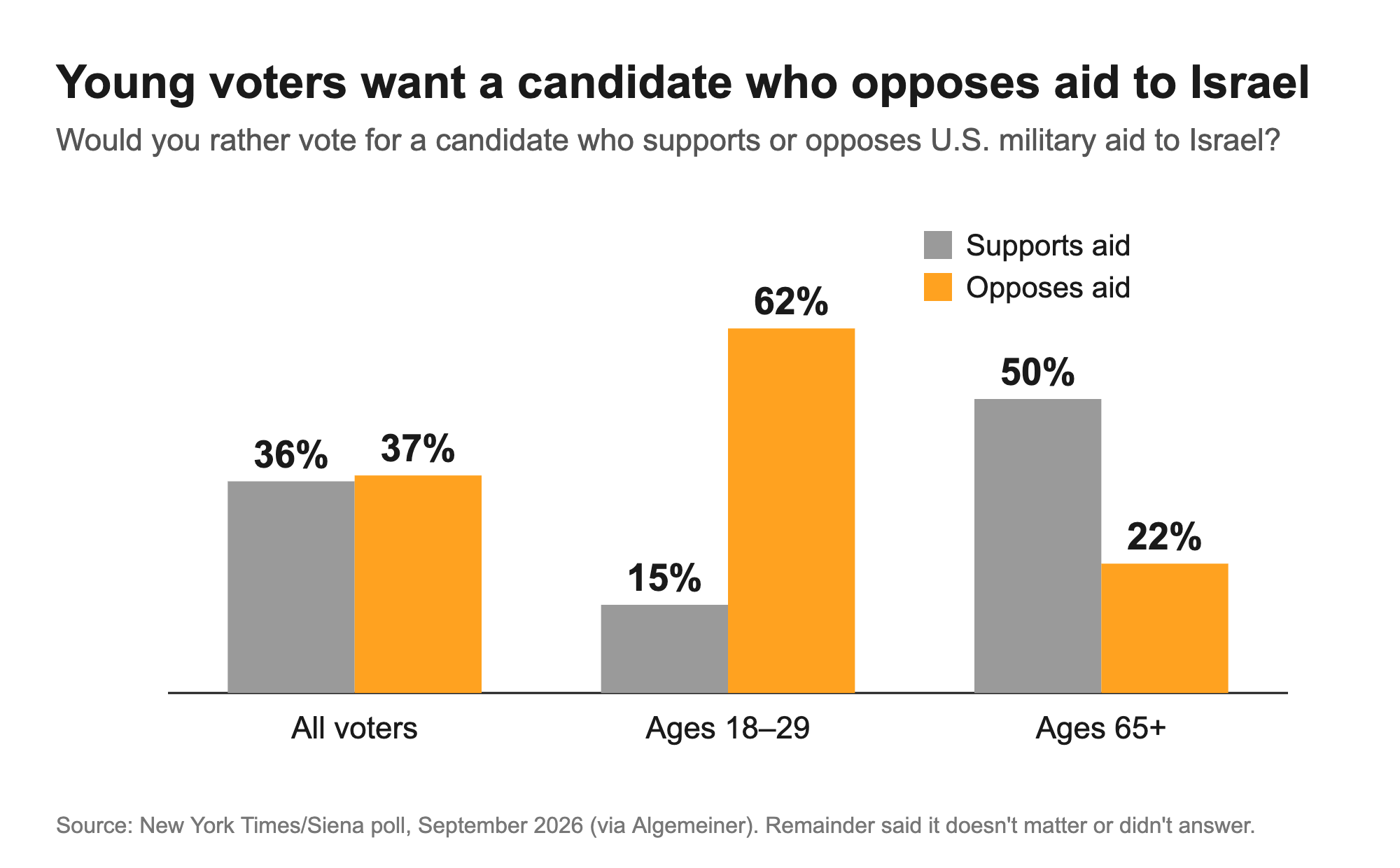
Trump named his own reason for the timing, and the polling backs it up. In a Times/Siena poll from September, voters under 30 preferred a candidate who opposes military aid to Israel by 62 percent to 15. In the same pollster’s May survey, opposition among Republicans climbed to 37 percent by May, up from 28 percent the previous September, with younger Republicans leading the shift.
Marjorie Taylor Greene called the announcement a last-ditch effort by a president who expects Republicans to lose badly, and noted that her amendment to cut the aid drew six votes in the House last year. Yaakov Katz, who defends the aid, said the timing was no coincidence and that the issue now splits Republicans as well as Democrats.
The Senate stalled its version of the defense bill in July, and negotiators from both chambers still have to reconcile Sections 219 and 1217 in the lame-duck session after the election. Senators Van Hollen, Sanders, Warren, Markey, Merkley and Welch oppose the provision, and Massie and Khanna tried to strip it in the House. Trump’s announcement lands days before that fight resumes, with the $3.8 billion figure already declared dead and the integration plan presented as the sensible next step.
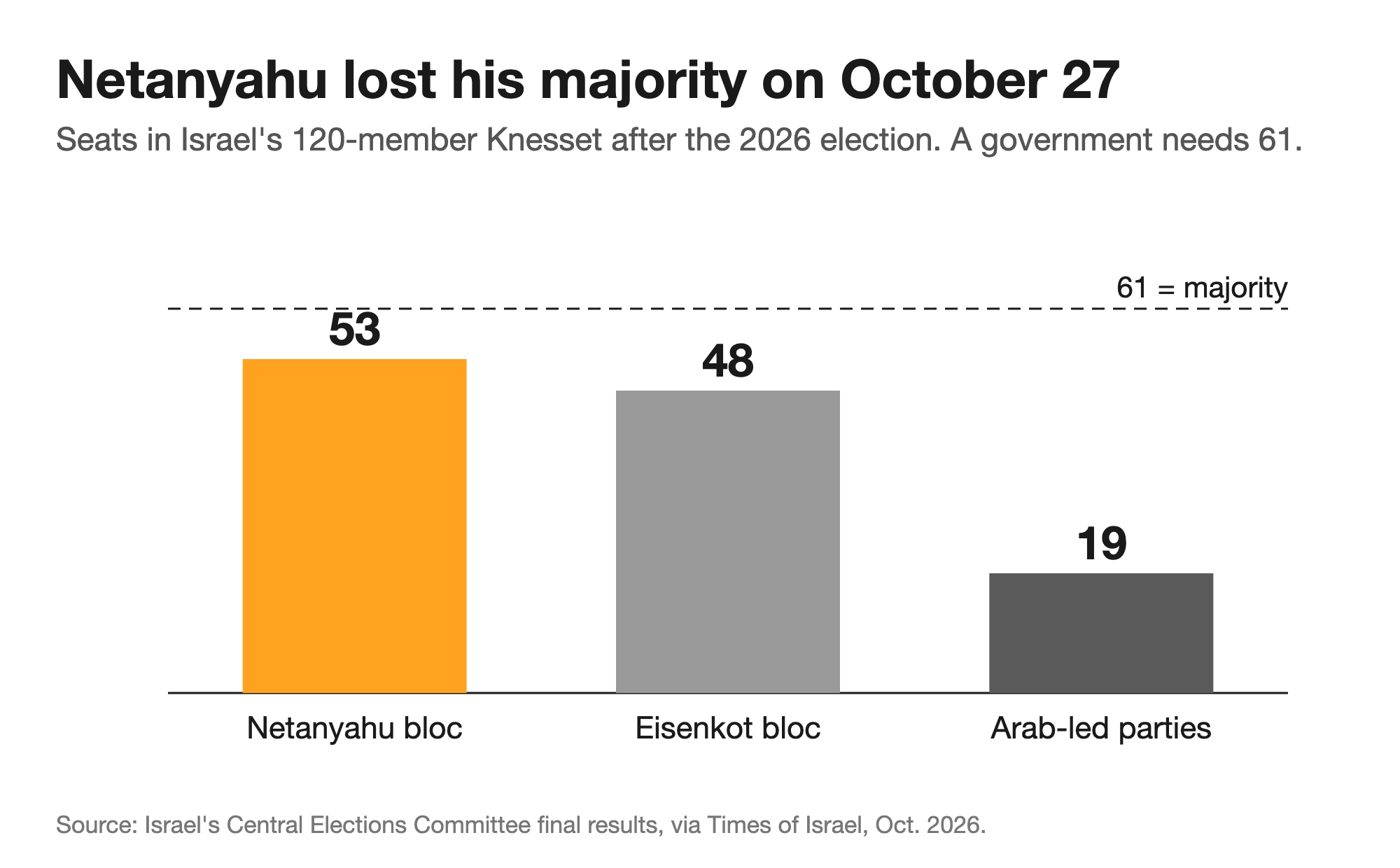
On October 27, Netanyahu lost his majority. His bloc won 53 seats, Gadi Eisenkot’s won 48, and Arab-led parties took a record 19. Netanyahu and his allies have since claimed Arab parties stole the vote, and Israel’s Central Elections Committee dismissed the claim as baseless. During the campaign, Netanyahu sold the end of aid as Israel standing on its own two feet. A week after losing his majority, he received the American president’s public endorsement of that program, credited to him by name, while he fights to hold on to power.
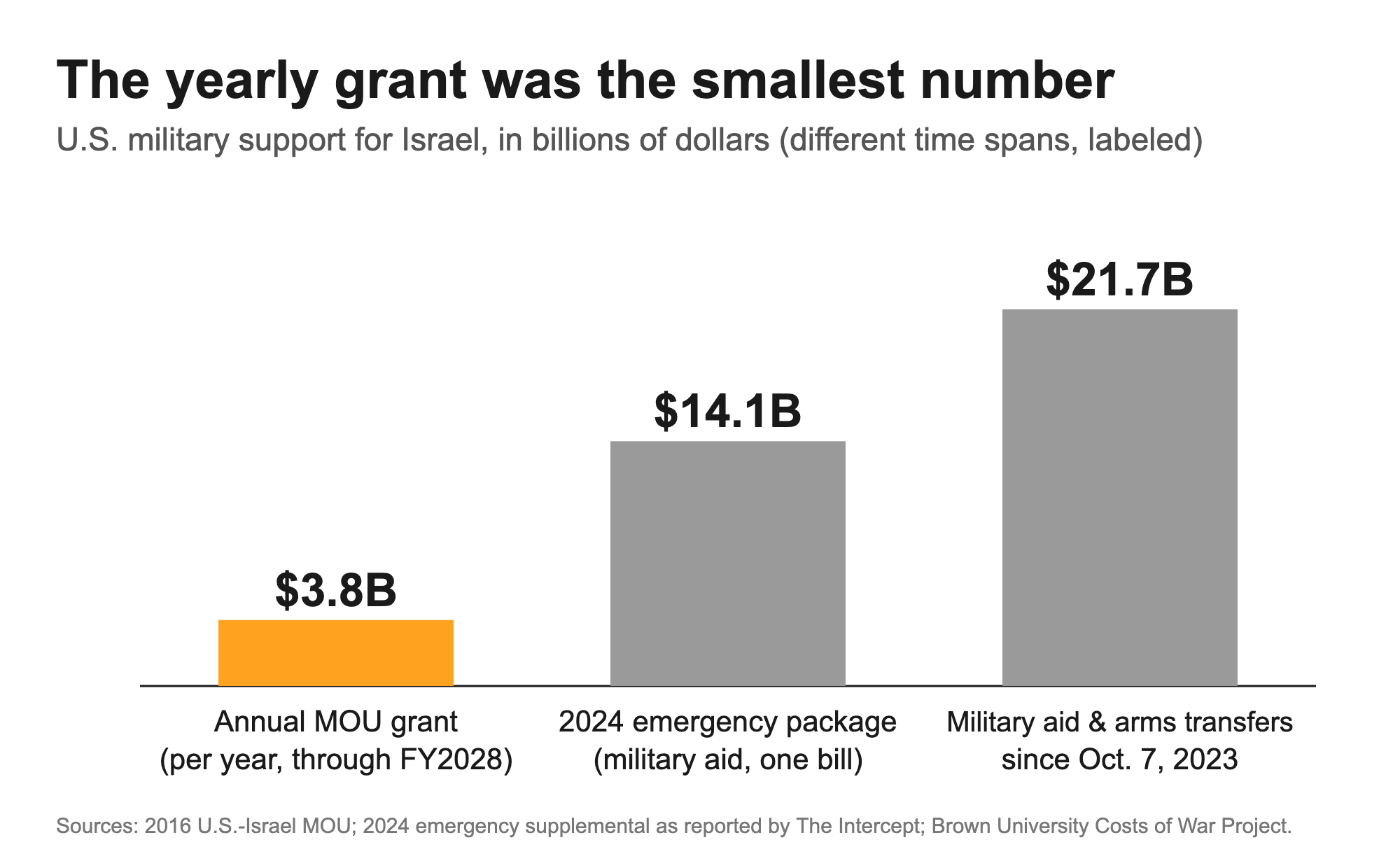
The $3.8 billion was also only the predictable part of the money. In 2024 Congress passed an emergency package with $14.1 billion in military aid for Israel, on top of the memorandum. Brown University’s Costs of War project counts $21.7 billion in U.S. military aid and arms transfers to Israel since October 7, 2023. Trump said Tuesday that Israel can still buy American weapons, and nothing in his announcement touches the supplemental route Congress used during the war.
Most people who saw Tuesday’s headline will think American support for Israel just got smaller. The documents describe the same commitment moving out of the foreign aid budget and into the Pentagon’s, through a permanent framework that ties the two militaries together for decades. The vote on that framework falls to a lame-duck Congress, in the weeks after an election where the old aid line became a liability.
Anyone paying attention understands this. Sadly, few are paying attention.
He didn’t. He is merging the militaries.