


There are years the world insists on remembering, and years it insists on forgetting. And then there are years it remembers only so it can weaponize that memory against you.
I have spent my entire life trying to explain that the story of Palestine cannot begin in 1948, or 1967, or—God help us—on October 7, 2023. That date has become a kind of incantation, a spell cast to flatten everything that came before it.
But history does not begin where power wants the story to start.
History begins where the wound begins.
When I stepped into Palestine 36 (which has a 100% rating on Rotten Tomatoes), acting out moments my grandparents lived through, I felt the air of another century press against my lungs. Their fear. Their revolt. Their stubborn, impossible insistence on staying human in the face of British rule and the Zionist project it was nurturing. Standing there, inside their unextinguished memory, I understood something: storytelling is not just an art — it is the first and final line of resistance.
It is an act of love.
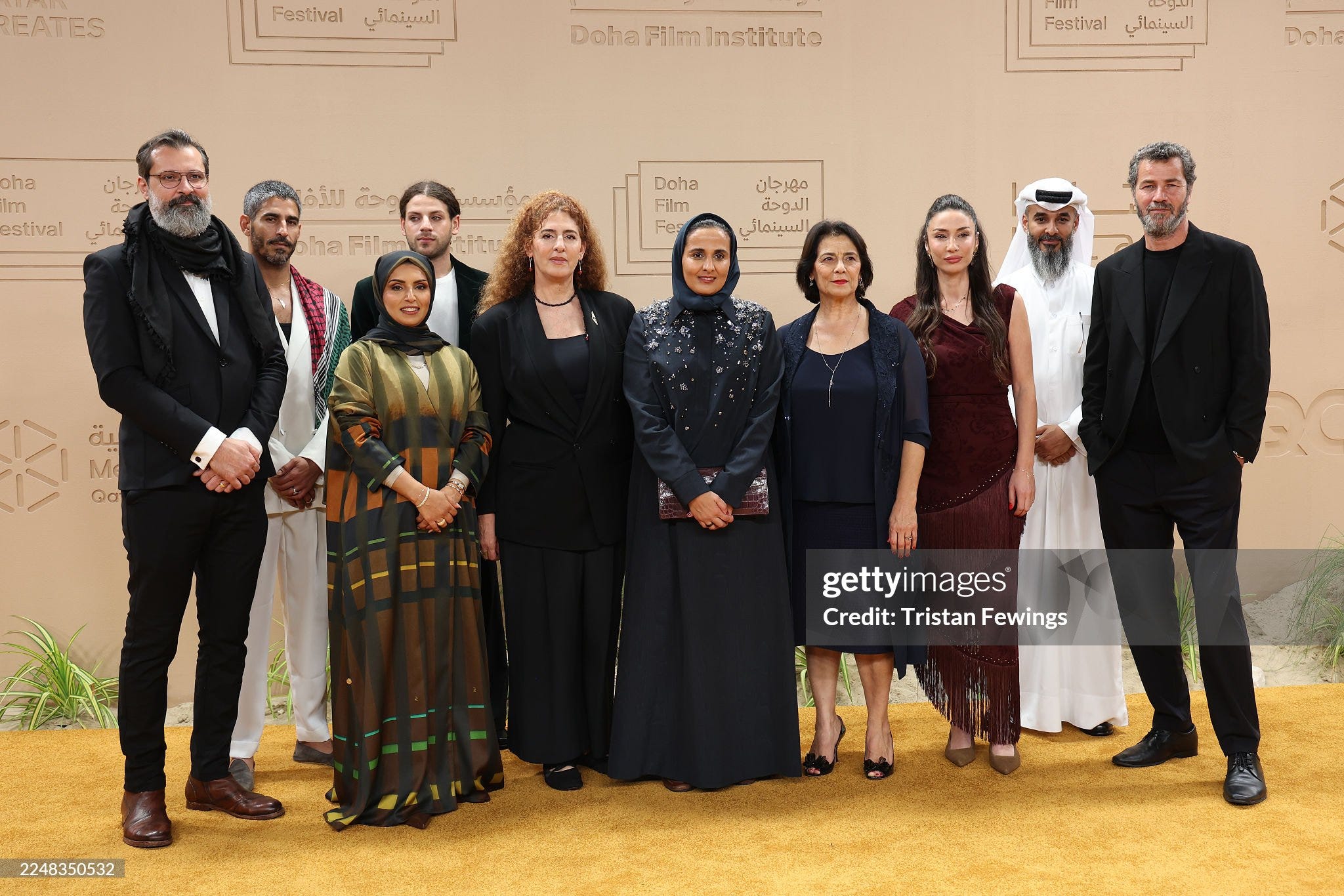
This film, which is Palestine’s official selection for Best International Feature at the 98th Academy Awards, makes visible what the colonizer has tried hardest to bury. It transports us back to 1936, when Palestinian villagers and urban workers — divided by class, religion, region, and rhythm — rose up together. Because that is another truth empire fears: when we are not divided, we are unstoppable.
Whenever tyrants want to dominate us — whether in 1936 or 2025 — they start with division. Divide the workers from the farmers, Muslims from Christians, the city from the village, the landless from the landowners. Divide until we cannot see each other. Divide until we forget we belong to the same wound. Divide until we forget who is holding the knife.
But in 1936, Palestinians refused that script. Workers shut down the ports. Merchants shuttered the shops. A six-month general strike — one of the longest anti-colonial strikes of the 20th century — brought the British Empire to its knees. And when the cities were crushed with hunger and humiliation, the countryside rose up next. Farmers, sharecroppers, the landless and nearly landless — the people empire expects to suffer silently — took up guerrilla resistance.
This is the part the world tries hardest to erase.
And this is the part Palestine 36 revives.
The British did not just suppress the revolt; they dismantled Palestinian political life for a generation. They flattened neighborhoods. They crushed unions. They exiled leaders. They turned Jaffa — my grandfather’s Jaffa — into rubble. They rewrote the labor system to ensure Palestinians could be replaced, structurally, forever.
Palestine 36 resurrects the workers and falaheen (farmers) of 1936, sabotaging a century of colonial narrative-building. It collapses the distance between past and present. It says plainly: none of this began yesterday. Not the dispossession, not the racial engineering, not the machinery of erasure.
That is why reclaiming our stories is urgent.
Because the story is the first thing empire steals, and the last thing it fears losing.
As critics noted — from The Guardian to Variety — Palestine 36 indicts all the systems that tried to erase it. It forces British audiences to confront what is still not taught in their schools. It forces viewers everywhere to confront the fact that Palestinians did not suddenly emerge out of dust and trauma in 1948. We had a whole world before the catastrophe — and a whole resistance they tried to burn.
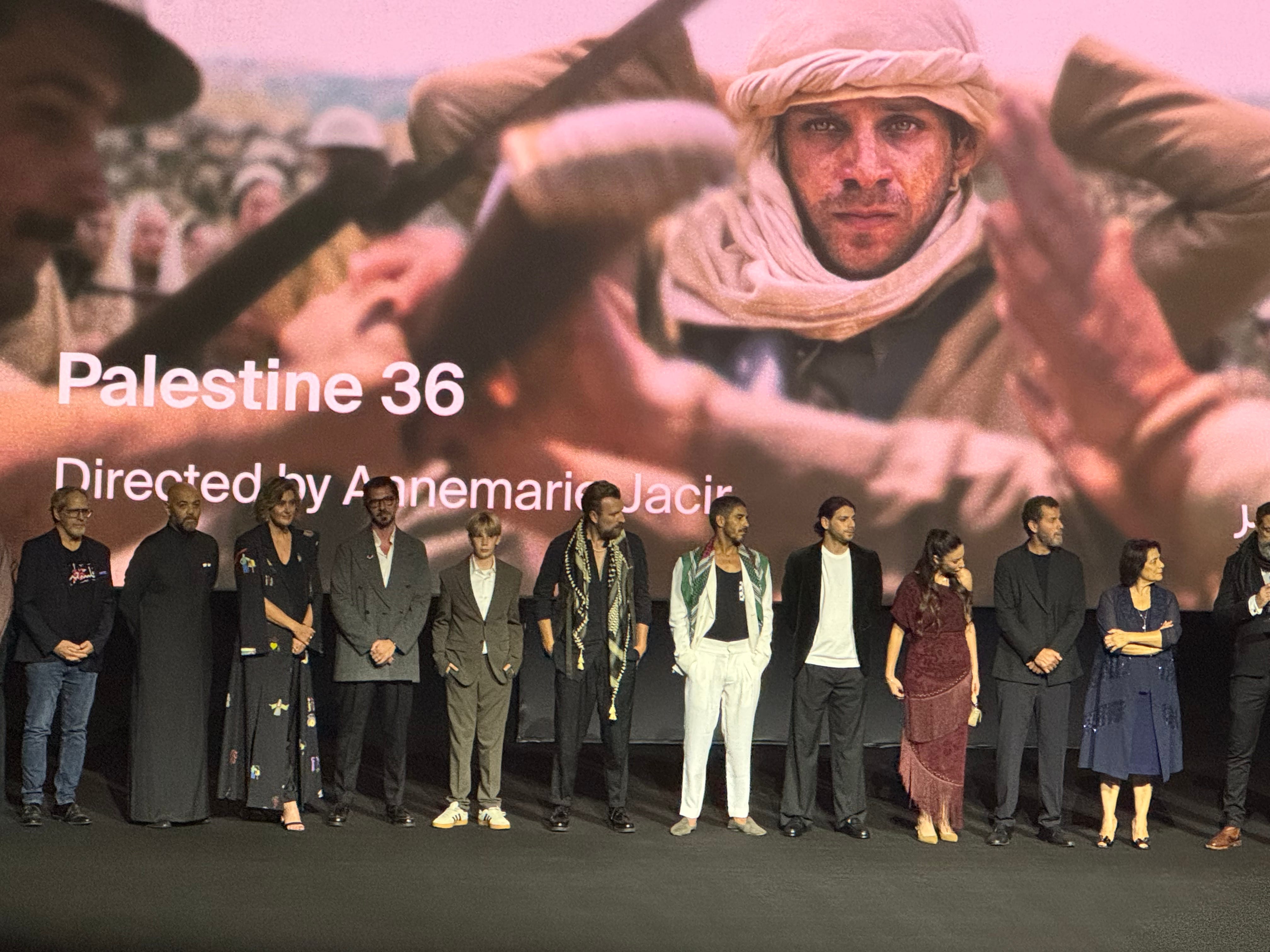
The film’s power also lives in its people. Palestine 36 gathers Palestinian heavyweight actors Hiam Abbass, Saleh Bakri and others — and sets them opposite Jeremy Irons, Liam Cunningham, Billy Howle and a brutal, all–too-familiar Wingate played by Robert Aramayo, each one embodying a different face of empire and resistance. Variety described the performances as “uniformly excellent,” an ensemble where every actor sharpens the others — which is exactly what a story like this demands: not a single hero, but a people refusing to be erased.
And here is the truth:
What terrifies the colonizer is not our grief — they welcome our grief. What terrifies them is our memory. Because memory is evidence.
Memory is indictment.
Even the score insists on memory. Ben Frost’s music, recorded with the Qatari Philharmonic Orchestra, moves like weather across the film — strings that sound like a gathering storm, percussion that feels like boots on stone, then passages so fragile they almost break under their own beauty.
Critics have called the film a “rousing historical epic” and a “cinematic tour de force,” but what stayed with me was how the sound and the performances together make 1936 feel less like a period piece and more like a warning flare from our grandparents, launched directly into our present.
Memory is a map back to every orchard, port, village, and street they swore we would forget.
Storytelling is how we keep those coordinates alive.
This is why I find myself drawn to every form of narrative reclamation — including The Visitor, the Palestinian horror film I’m producing and acting in with Rolla Selbak. Horror is a smuggler of truth; metaphor carries what the world refuses to see.
As Rolla says, “It’s a story about erasure and the human need to be seen.” And isn’t that the core of every Palestinian struggle? To insist on being visible, to exist fully, in a world invested in looking away.
And then Gaza.
And then the genocide that continues to unfold as the world debates what to call it, as if vocabulary were the tragedy. Entire neighborhoods erased in a night — and with them, archives of laughter, ancestry, and breath. Something broke inside me. So I turned to music. I assembled a one-hour mix for Radio Al-Hara — rage and tenderness intertwined, grief woven with defiance. Art became oxygen.
As Saleh Bakri told GQ, art is “an outlet for all the love and pain that can often feel like too much to bear.”
This is why much of the world fears Palestinian art: Because when we reclaim our story, we reclaim our power.
This is why we speak, film, write, dance, and sing, because when we do we expose everything they worked a century to hide. We bring our light to the darkness.
If the world wants to use October 7 like a cudgel, like a historical eraser, it should know this:
History did not begin that day — but your panic did.
Your panic that we might reclaim the narrative.
Your panic that we might remind the world of 1936.
Your panic that we might name the architecture of domination you have tried to pass off as “conflict.”
Your panic that we might expose how division is engineered to break the oppressed and empower the powerful. Palestinians rose up in 1936. And we are rising now. And every time we tell our story, we rise again.
They want a Palestine without Palestinians — a land without its people, a history without witnesses, a future without resistance.
But here we are.
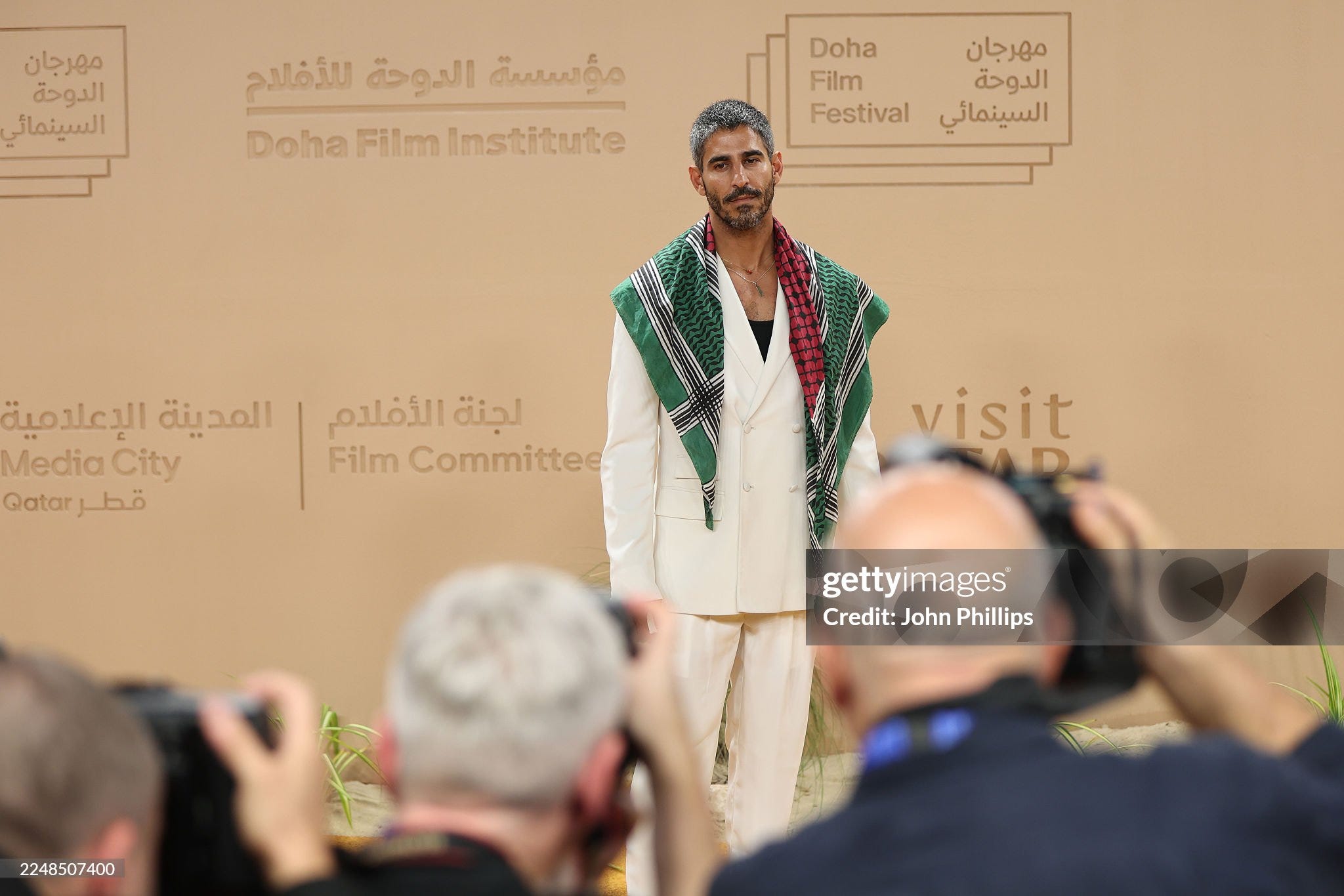
Still breathing. Still writing. Still remembering. Still refusing to be divided. Still refusing to disappear. A people who guard their memory cannot be conquered — only delayed. We do not deserve a dream deferred.
We have waited long enough.
READ MORE ABOUT THE 1936 REVOLT BY GHASSAN KANAFANI
WATCH PALESTINE 36 WIN TOP PRIZE AT TOKYO FILM FESTIVAL BELOW:
Congratulations to all who made this possible. Justice for Palestine
My grandfather served in the Signals Corps of the British Army. He arrived by ship to the port of Haifa in November 1937. Everything I know about his time there comes from a single photo album — a quiet archive of the images he captured: scenes of daily life in the markets, British and indigenous soldiers, ancient buildings, and Palestinians in traditional clothing.
Since recently learning about his posting ( after my father passed the album on to me ) I’ve been grappling with what this connection means in the context of what is happening there today. My grandfather was a kind, jovial man who married into a Maltese family. It’s difficult for me to imagine him as oppressive, and yet he would have been required to follow orders regardless of what he personally thought about the politics of the time.
That tension — that question of complicity across generations — sits heavily on my shoulders as I try to process it all.
I’m currently writing a longer piece that I’ll share here on Substack, including some of the photographs from his album, along with my thoughts and reflections on this complex inheritance.